





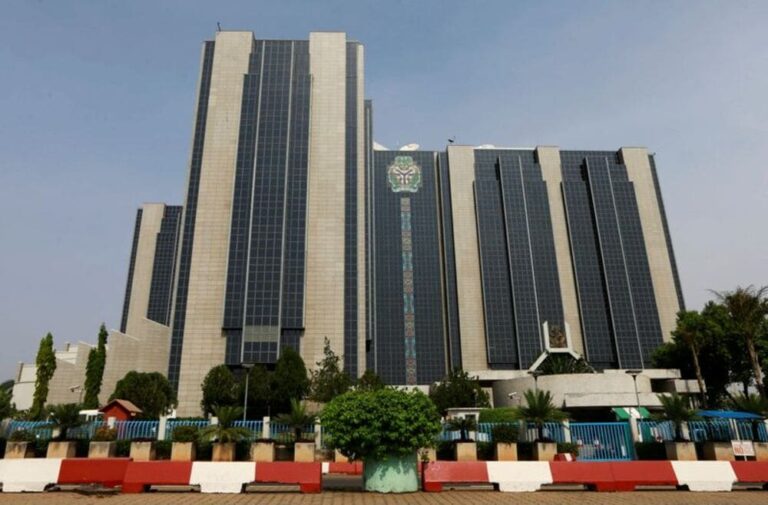
The Central Bank of Nigeria (CBN) says strong governance and risk discipline are critical to the success of Nigeria’s ongoing bank recapitalisation programme.
Dr Blaise Ijebor, Director of Risk Management Department and Chief Risk Officer at the CBN, said on Thursday at a virtual risk management roundtable organised by the Association of Enterprise Risk Management Professionals (AERMP) that the recapitalisation exercise was a macro-financial stability intervention designed to strengthen the resilience of financial institutions and position the sector for sustainable growth.
The event convened in Lagos had the theme: “Recapitalisation, Mergers and Acquisition in the Nigerian Financial System; Minimising Risks and Maximising Opportunities for Greater Post-Recapitalisation Value”.
Dr. Ijebor, who was represented by another Director, Olabanji Samuel, said that lessons from past consolidation efforts, particularly the 2004–2005 banking reforms and the aftermath of the 2009 financial crisis, showed that capital alone could not guarantee stability.
“Capital builds strength, but governance sustains it,” he said.
According to him, weak governance, poor credit risk practices and incentive-driven lending had previously undermined well-capitalised institutions.
He explained that the current recapitalisation exercise was forward-looking and aligned with global standards, incorporating stress testing, capital adequacy and recovery planning to ensure banks can withstand shocks without public intervention.
Ijebor said that the exercise placed greater responsibility on risk and compliance professionals, describing them as strategic partners.
He urged risk leaders to provide forward-looking assessments of how recapitalisation and potential mergers and acquisitions could alter institutional risk profiles, while compliance officers should anticipate regulatory implications.
Ijebor identified key risk areas requiring attention, including balance sheet vulnerabilities, operational and integration risks, systemic risks, and governance and compliance concerns.
He stressed the need for rigorous stress testing, accurate asset valuation, strong board oversight and careful management of anti-money laundering and counter-terrorism financing frameworks.
According to him, the recapitalisation process also presents an opportunity for banks to strengthen enterprise risk management systems, improve data quality and integrate risk considerations into strategic planning.
Ijebor said that increased capital should not lead to excessive risk-taking, urging boards to recalibrate risk appetite frameworks and align capital allocation with long-term value creation.
He said that if properly managed, the exercise could unlock opportunities in infrastructure financing, capital market development, trade facilitation, innovation and cybersecurity resilience.
“Opportunities will not realise themselves; they depend on the choices we make today,” he added.
GIK/APA