



Nigeria’s Minister of Solid Minerals Development, Dr Dele Alake, has said that de-risking tools such as guarantees are key to advancing climate adoption efforts and economic transformation of nations, including Nigeria.
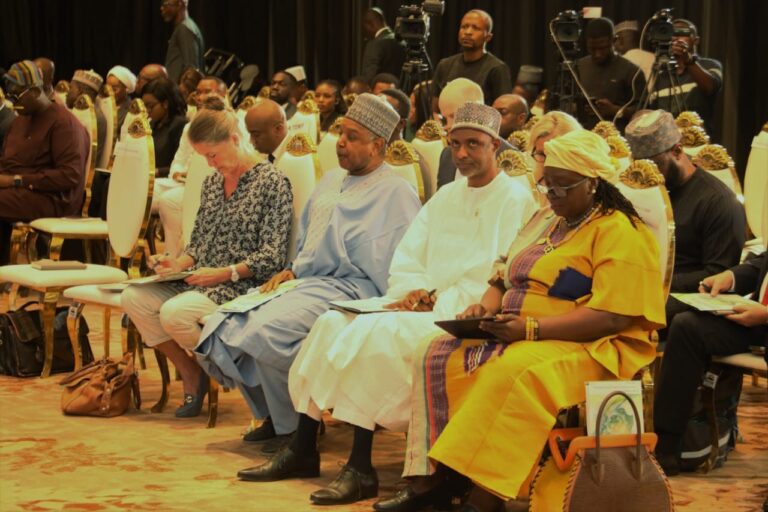
Speaking at a high-level stakeholders’ roundtable on mainstreaming financial guarantees in Nigeria, organised by the Green Guarantee Group (GGG) on Tuesday in Abuja, Alake said that sectors such as renewable energy, mining, agriculture, infrastructure and climate-resilient industries required innovative financing mechanisms to reduce risks and attract long-term investments.
He restated Nigeria’s commitment to developing policies and institutional frameworks that would attract private capital into strategic sectors of the economy.
The minister underscored the importance of strategic collaboration among governments, development institutions, private investors and international partners to address financing gaps, especially in emerging economies.
The Nigerian government, he said, was committed to strengthening international partnerships and deploying innovative financing mechanisms to unlock investments in green development, support Small and Medium-Scale Enterprises and accelerate sustainable economic growth across Nigeria.
The workshop, he said, provided a platform for valuable discussions among policymakers, financial institutions, development partners and private sector stakeholders to chart practical solutions to Nigeria’s financing gaps affecting development.
Speaking, the Co- Chairman of the GGG, Mr Lars-Hendrik Roeller, noted that guarantees had emerged globally as important instruments for reducing pricing risks, improving investor confidence and unlocking private capital for climate and development projects.
Roeller said the GGG aimed to establish stronger global guarantee architecture capable of supporting sustainable investments, particularly in developing countries.
He said plans were underway to expand international cooperation through an alliance of countries focused on improving guarantee systems and strengthening climate financing mechanisms.
On her part, the German Ambassador to Nigeria, Annett Günther, said that Germany was committed to deepening climate finance cooperation with Nigeria to unlock private investments and strengthen sustainable development efforts.
Guarantees, she said, had proved effective in reducing investment risks and could mobilise up to six times more private financing than traditional development instruments.
Earlier, the Co-Chair of the GGG, Faruk Yabo, said that it was established to address one of the most persistent obstacles to climate and development finance.
“The gap between the scale of capital available globally and the volume of that capital that actually reaches bankable projects on the ground, particularly in markets like ours (Nigeria),” he said.
Yabo added that the challenge was particularly significant in markets such as Nigeria, where access to finance remains a major barrier to development.
He said the objective of the workshop was to build a shared understanding among government, regulators, development finance institutions, domestic guarantee providers and the private sector on what the GGG is and its recommendations.
He added that the workshop would also explore how the strategic use of guarantees could be applied to Nigeria’s specific context.
It will be recalled that the GGG was announced at COP28 and launched in March 2024, bringing to reality the fact that Germany and Nigeria have initiated dialogue and made progress in addressing challenges in the use of guarantees for climate finance.
GIK/APA