





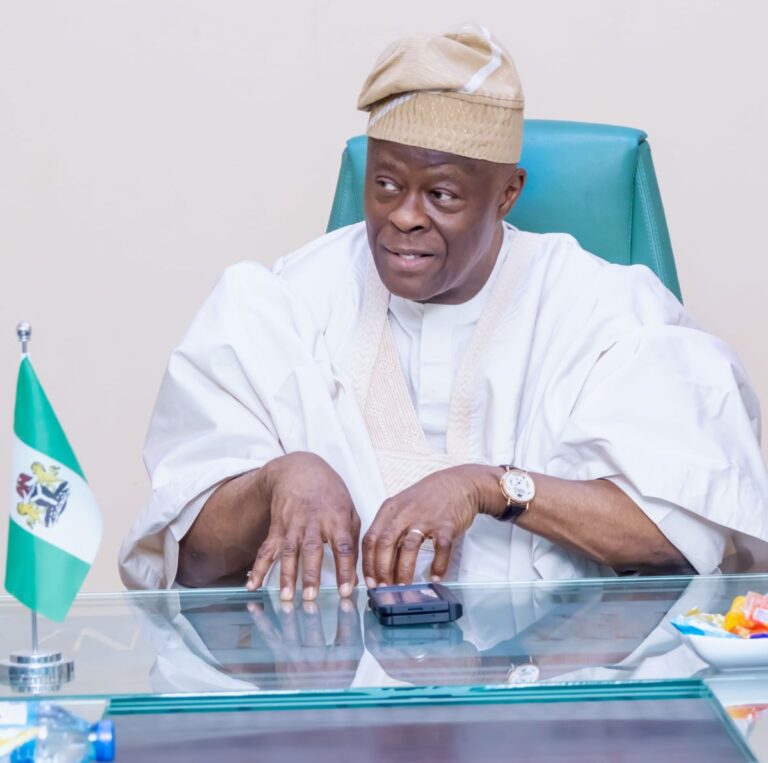
Nigeria’s Minister of Finance and Coordinating Minister of the Economy, Mr. Wale Edun, says that Nigeria is deliberately shifting from expensive external borrowing to a growth model anchored on private capital and domestic reforms.
Delivering a keynote address on the global economy and the need for stronger South-South cooperation at the G-24 Technical Group Meeting in Abuja, Edun said: “Nigeria is deliberately shifting away from a model overly reliant on expensive external borrowing toward a more resilient growth framework powered by domestic reforms, private capital, and diversified financing instruments.”
He explained that the new approach was in line with evolving global development finance priorities that emphasise innovative financing, blended instruments and expanded concessional windows.
According to him, Nigeria is targeting an average medium-term growth of seven per cent, which would require raising the investment-to-GDP ratio to at least 30 per cent.
“With the current public sector’s financing capacity at roughly 5 per cent of GDP, the strategy emphasises attracting private capital through structured PPPs, optimising public assets, and creating bankable, de-risked investment opportunities,” he said.
Edun noted that Nigeria’s reform programme under President Bola Tinubu was anchored on a three-phase agenda of market correction, stabilisation and growth acceleration.
He disclosed that over the past two years, the administration had implemented “bold, politically difficult, but necessary reforms aimed at restoring macroeconomic stability,” adding that the measures had laid the groundwork for a more competitive and resilient economy.
According to the minister, early outcomes of the reforms are becoming evident, with investor sentiment gradually recovering and significant capital commitments returning to the country.
“The reform path has attracted global recognition, and investor sentiment is steadily recovering. This renewed confidence is reflected in the return of significant capital commitments to Nigeria,” he said.
He cited Shell’s $20bn investment commitment as one of the notable examples of renewed private sector interest in the Nigerian market.
Edun described the current global environment as one defined by fragmentation, geopolitical rivalry and weakening multilateral institutions, warning that deepening geoeconomic confrontation could reduce global output by two percentage points and shrink global trade by 2.3 per cent.
He said emerging markets and developing economies were particularly vulnerable, noting that over a quarter of them had already lost access to international capital markets, while more than half of low-income countries were in or approaching debt distress.
To strengthen fiscal resilience, the minister said Nigeria was also advancing a comprehensive domestic resource mobilisation strategy.
“Through broad-based tax reforms, implementation of a modernised tax law, and improvements in compliance and automation—including the National Single Window initiative—Nigeria plans to raise its tax-to-GDP ratio to 18 per cent in the medium term,” he said.
He added that revenue reforms underway included deploying RevOp, improving Federal Treasury receipts, implementing a Central Billing System and ending direct deductions by portals and payment service providers.
Edun stressed that the era of waiting for external capital flows to drive development was over, urging countries in the Global South to strengthen collaboration.
“The era of waiting for trickle-down prosperity from the North has passed. The future belongs to regions that collaborate, innovate, and integrate with purpose,” he said.
Local media reports said that Edun called on members of the G-24 to advocate reforms of the global financial architecture, including strengthening the IMF’s global financial safety net, expanding concessional lending by multilateral development banks and prioritising local currency financing.
According to Edun, such reforms are critical to support countries that have lost access to international capital markets and to close the widening Sustainable Development Goals financing gap.
He assured that Nigeria would continue to link major infrastructure investments, including the Lagos–Calabar Highway and ongoing power sector reforms, to job creation and inclusive growth and urged G-24 members to use the meeting to harmonise their positions and present a unified voice in shaping a more inclusive and resilient global financial system.
GIK/APA