





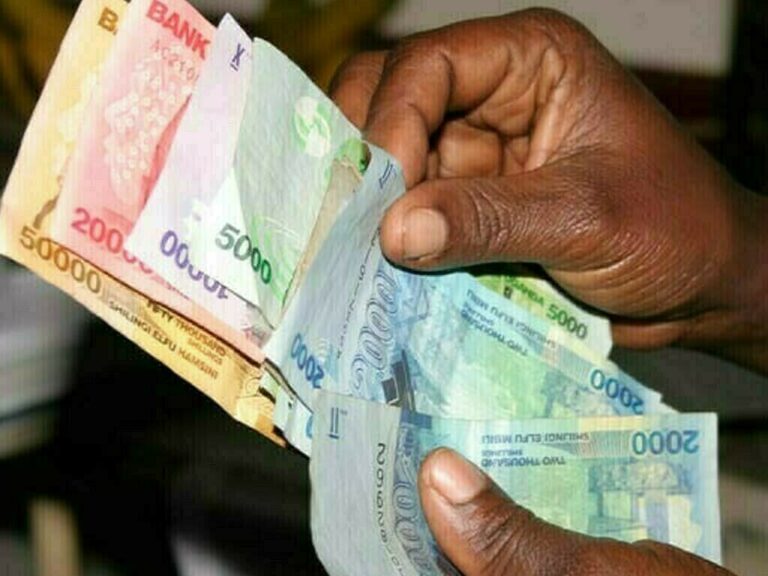
The Ugandan parliament has passed a Shs84.3 trillion national budget for the 2026/2027 financial year following the adoption of the Appropriation Bill and the report of the Budget Committee that details how the funds will be raised and spent amid growing fiscal pressure from debt and statutory obligations.
The budget was approved during the sitting of the House chaired by Speaker Anita Among on Friday.
Finance State Minister, Henry Musasizi told Parliament that the budget will be financed through domestic revenue of Shs44.18 trillion, representing more than half of the total budget.
Other sources include domestic borrowing of Shs11.97 trillion, external project support of Shs11.27 trillion, domestic refinancing of Shs13.97 trillion, petroleum revenues of Shs1.44 trillion, budget support grants of Shs1.22 trillion and local government revenues of Shs339 billion.
Of the approved expenditure, Shs47.16 trillion has been allocated as discretionary spending while Shs37.23 trillion is classified as statutory expenditure covering debt servicing, wages, pensions and other legally mandated obligations.
Presenting the Budget Committee report, the Deputy Chairperson, Remigio Achia noted that a significant share of the budget is absorbed before reaching service delivery sectors, largely due to debt obligations.
Debt servicing alone is projected to consume about Shs33.4 trillion nearly 40 percent of the total budget.
Interest payments are estimated at Shs12.4 trillion driven mainly by domestic borrowing, while principal repayments push total debt servicing above Shs33 trillion, making it the single largest expenditure item.
Achia said the budget is anchored on boosting production, industrialisation, and household incomes across key sectors.
Agro-industrialisation has been allocated Shs2.2 trillion for agricultural research, inputs, irrigation, extension services, agro-processing and market access.
Tourism development receives Shs571.5 billion for infrastructure at tourism sites and global promotion.
Mineral-based industrial development including oil and gas is allocated Shs435.5 billion for mineral exploration, the national mining company, mineral markets, and ongoing petroleum infrastructure projects.
Science, technology and innovation including ICT and the creative industry, is allocated Shs1.1 trillion to support innovation, digitisation of government services, internet expansion and business process outsourcing.
Shs2.5 trillion has been allocated to wealth creation programmes under the Parish Development Model, Emyooga and youth initiatives, while the security sector receives Shs10.2 trillion to maintain peace and stability.
Human capital development takes the largest share at Shs13.5 trillion including a phased 25 per cent salary enhancement for teachers and Shs496.3 billion for preparations for AFCON 2027.
Infrastructure development is allocated Shs10.8 trillion for roads, railways, water, electricity and transport systems.
Manufacturing receives Shs1.04 trillion, while environmental protection is allocated Shs514 billion.
Other allocations include Shs651.5 billion for administration of justice and Shs1.2 trillion for legislation and oversight.
Additional funding has also been provided for priority gaps, including Shs664.3 billion for road completion works, Shs45 billion for rural electrification, Shs100 billion for medicines and health supplies, Shs20 billion for export promotion, Shs100 billion for cattle compensation in Northern Uganda, Shs20 billion for ambulances and Shs10 billion for maintenance.
WN/as/APA