





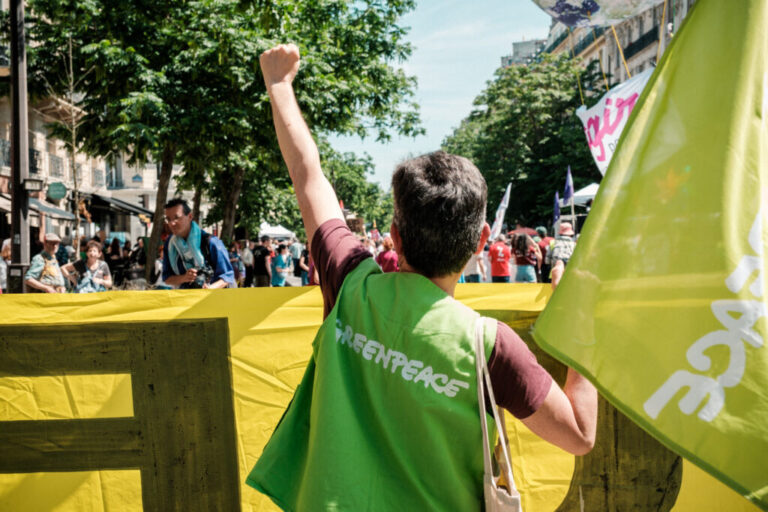
On the eve of the 4th International Conference on Financing for Development (FfD4), African civil society organisations took to the streets of Seville to demand global economic justice and urgent tax reforms.
Alongside Greenpeace activists, they staged a striking protest featuring a giant baby wielding a chainsaw aimed at the planet Earth—symbolising the environmental destruction caused by major polluting corporations.
“Seville represents a unique opportunity to advance global economic justice. It’s time for billionaires and polluting companies to pay their fair share to fund climate action, nature protection, and public services,” said Fred Njehu, Global Policy Lead for the Fair Share campaign at Greenpeace Africa.
The mobilisation comes as many African countries struggle to respond to climate crises due to the burden of external debt.
“The weight of debt prevents the most vulnerable countries from effectively tackling environmental, social, and climate crises,” noted Hanen Keskes, Campaigns Lead for Greenpeace MENA.
African civil society groups are calling for urgent debt relief for vulnerable nations, the adoption of the UN Tax Convention to ensure fair global tax rules, the elimination of fossil fuel subsidies, and the introduction of taxes on major polluters to finance climate loss and damage.
‘Compromiso de Sevilla’ falls short
The final draft document of the conference, released ahead of time under the title Compromiso de Sevilla, has drawn criticism from African organisations, who say it does not meet the urgency of the moment.
While it includes some progress on international tax cooperation, its ambition on debt architecture reform has been “severely watered down under pressure from Northern countries.”
Held from 30 June to 3 July at the FIBES Conference Centre in Seville, the FfD4 summit is a rare, once-a-decade opportunity to reform the global financial system.
In light of the “floods, fires, droughts, and storms” disproportionately affecting the African continent, civil society is urging governments to “show true commitment to building a fairer and more sustainable future based on solidarity—not exploitation.”
ARD/sf/ac/lb/as/APA