





The Algerian President Abdelmadjid Tebboune’s latest announcements regarding the Bled El Hadba phosphate project and the future Algiers-Tamanrasset railway line once again underscore the Algerian authorities’ stated ambition.
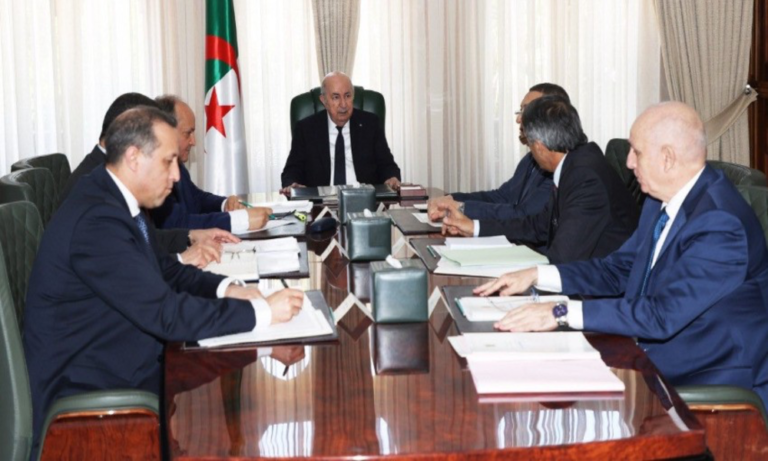
Meeting with the country’s top economic and financial officials, the Algerian head of state set two major deadlines: the start of production at the Bled El Hadba integrated phosphate project in the first quarter of 2027 and the launch of construction on the Algiers Tamanrasset railway line as early as September.
These announcements also highlight a more nuanced reality: the country’s economy continues to rely on very long-term projects whose concrete benefits have yet to be fully demonstrated.
On paper, the figures are substantial. The Djebel Onk deposit is touted as one of the country’s largest, with 840 million tonnes of recoverable reserves and an estimated lifespan of nearly 80 years.
The authorities project annual production of 10.5 million tonnes of raw phosphate and 6 million tonnes of processed fertilizer. Added to this are several hundred kilometres of railways and the expansion of the port of Annaba in order to support exports.
Yet these announcements are part of a long series of strategic projects regularly touted as the future drivers of Algeria’s economic diversification.
Despite repeated rhetoric, the country’s dependence on hydrocarbon revenues remains the defining feature of the national economic model.
Each new megaproject is thus imbued with a quasi-salvific mission: to prepare for the post-oil era and generate new sources of foreign exchange.
This logic, however, fuels a certain scepticism among observers. The technical, logistical, and financial challenges remain considerable.
The simultaneous construction of industrial complexes, rail infrastructure and port facilities requires a sustained mobilization of public resources in a global economic environment marked by uncertainty and volatility in commodity markets.
The Algiers-Tamanrasset railway project also illustrates this gap between ambition and reality. Presented as a strategic corridor linking the Mediterranean to the Sahel, this infrastructure will have to traverse thousands of kilometres of desert terrain.
Its actual cost, economic viability and realistic timeline for completion remain shrouded in numerous questions.
Beyond the hype, the real question remains the same: Will Algeria succeed in turning these projects into sustainable economic drivers, or will it see yet another accumulation of promises whose results will take years to materialize?
After several decades of stimulus plans, industrial programmes, and major construction projects, a segment of the public now seems to be calling for less rhetoric and more tangible results.
The deadlines set for 2027 will, in this regard, serve as a significant test of the credibility of this new phase of development announced by the authorities.
MK/AK/Sf/fss/gik/APA