





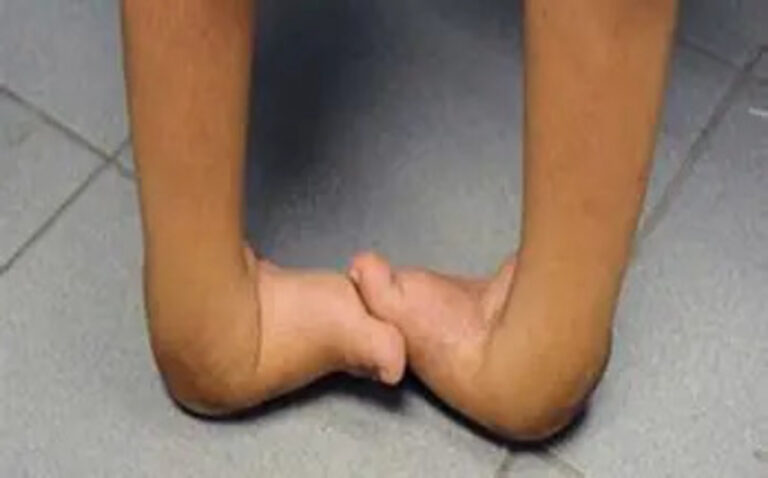
A long‑term training partnership between Mercy Ships and Malagasy healthcare professionals is now yielding measurable clinical results, with local medical teams in Madagascar able to independently treat children born with clubfoot, a condition that can cause lifelong disability if left untreated.
Clubfoot is a congenital deformity in which one or both feet turn inward and downward. Without early intervention, children often face severe mobility challenges.
The Ponseti method – based on serial casting, minor surgery and bracing – is considered the global standard of care and has been shown to correct about 90 percent of cases, making it especially valuable in low‑ and middle‑income countries.
Mercy Ships first helped establish a Ponseti‑based clinic at Hospital Analakininina in Toamasina in 2015, training Malagasy clinicians to deliver the treatment.
Those teams have since continued providing care on their own, with current mentoring programmes focused on managing older children and more complex cases.
That progress is reflected in the experiences of two young patients, Fanirisoa, 5, and his brother Vonjy, 3.
Vonjy was treated entirely by Malagasy clinicians trained through the earlier programme, while Fanirisoa received care under the ongoing mentoring initiative designed to expand local surgical capacity.
The training effort has been supported by international volunteers such as United Kingdom-based orthopaedic surgeon Rachel Buckingham who worked alongside Malagasy surgeons in the operating room to refine the precise procedures used in clubfoot correction.
“The goal is to strengthen local teaching and training so that, one day, Mercy Ships is no longer needed,” Buckingham said.
For the boys’ father, Edmine, the results are transformative.
He said his sons can now stand and walk normally, avoiding the physical and social burdens that untreated clubfoot often brings.
JN/APA