





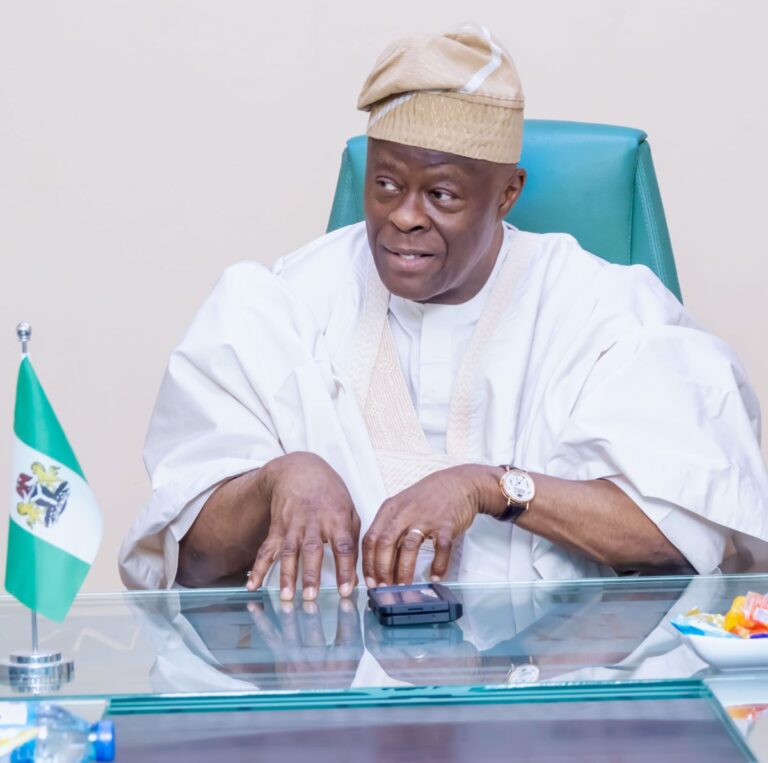
Nigeria’s Minister of Finance and Coordinating Minister of the Economy, Mr. Wale Edun, has warned that Africa’s rising debt costs and shrinking development aid have left the continent with little choice but to depend more on private capital and regional investment.
Speaking at the 5th B2B Agribusiness Matchmaking Event in Abuja on Thursday, Edun urged African countries to deepen intra-continental trade and mobilise domestic resources to cushion the impact of declining global support.
He said that the continent was grappling with debt-servicing obligations that divert scarce public funds from investment and development.
According to him, concessional financing and overseas development assistance have continued to fall, with the African Development Bank projecting that aid flows to the continent dropped by nine per cent in 2024 and are set to fall by another 17 per cent in 2025.
He noted that this trend reflects a broader retreat from multilateralism and a global shift away from coordinated development support.
“African countries are facing with high debt burdens in many cases, high debt servicing requirements that are gulping up funds that could otherwise be used for public investment but it was also emphasised that really it is the private sector that is the real source of investment, whether it’s foreign direct investment, whether it’s domestic investment,” he stated, adding that the tightening global climate has only reinforced a long-standing reality.
Edun said the world was turning away from the multilateral cooperation that defined the decades after the emergence of the Bretton Woods institutions and that the only remaining pockets of strong global collaboration appear in health and climate-related efforts, while broader economic assistance is drying up.
“The world has turned away from multilateralism, if you take out maybe the willingness for international cooperation in perhaps the health sector in some cases and definitely in the area of climate, the multilateralism of the last decades since the Bretton Woods institutions rose up is fast receding,” the minister said.
“Concessional financing and even flows, overseas development assistance flows to developing countries, to Africa have turned negative, were down by 9 per cent last year 2024, by 2025 the flows will be down perhaps by some estimates, AFDB’s estimates, 17 per cent so we have to look inward, we have to trade more with each other, we have to grow our economies together, the savings of our people being invested in productive activity.”
The Nigerian minister argued that African economies must intensify regional links, to boost value addition, and build investment-ready environments capable of attracting both domestic and foreign private capital.
He noted that the decline in global support makes it even more urgent for African nations to rely on their own productive capacity and deepen integration through intra-African trade.
The event, themed ‘Catalysing Arab Africa Trade: Unlocking New Frontiers in Food and Agribusiness Trade,’ is part of the Arab Africa Trade Bridges Programme, taking place in Abuja.
GIK/APA