





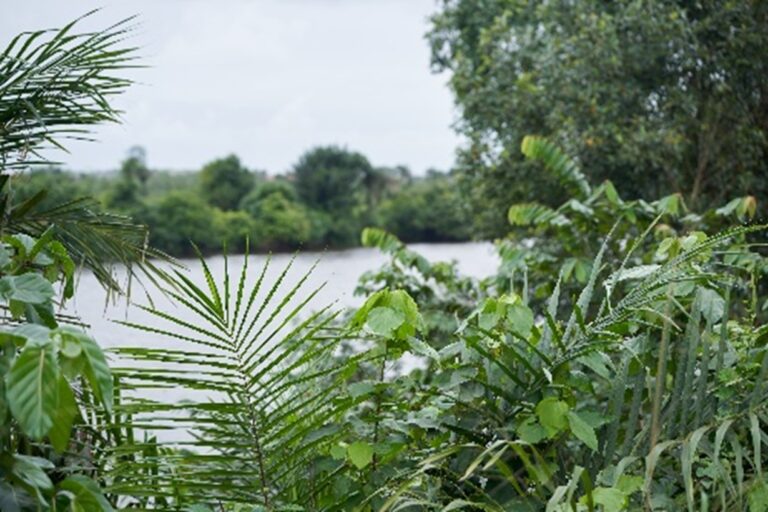
The Forest Stewardship Council (FSC) has officially approved a new Interim Forest Stewardship Standard (IFSS) for Sierra Leone.
Endorsed on October 2, 2025, the standard is set to take effect on March 15, 2026, providing a comprehensive framework for responsible forest management and sustainable product sourcing.
The IFSS serves as a vital tool for forest managers and businesses, aligning the country’s timber and forest industries with global sustainability benchmarks.
This milestone arrives as Sierra Leone ramps up environmental protection through the “Protect Sierra Leone Programme.” Launched in early 2025 under the Ministry of Environment and Climate Change, this initiative aims to safeguard biodiversity and meet the “30×30” target—a global commitment to protect 30% of land and ocean by 2030.
The new standard will help Sierra Leone fulfill several international climate and restoration pledges: AFR100: The goal to restore 0.7 million hectares of land by 2030. Emission Reductions: Supporting the target to cut emissions by 10% by 2030 and 25% by 2050. Conservation: Addressing the critical loss of 2.17 million hectares of tree cover recorded between 2001 and 2024.
Beyond conservation, the IFSS is designed to boost the “green economy” by creating better employment opportunities for local communities. By providing independent verification of responsible management, the standard ensures that: Biodiversity is preserved across diverse ecosystems, from mangroves to rainforests. Land rights of local communities are strictly protected. Sustainable livelihoods are supported through the responsible trade of forest products.
Patrick Epie, FSC’s coordinator for the Congo Basin and West Africa, hailed the development as a major step for the region. “This achievement reinforces Sierra Leone’s commitment to sustainable forest governance and contributes to the broader regional effort to align forest management with global sustainability goals,” Epie stated.
With approximately 14.7% forest cover and a significant amount of wooded land, Sierra Leone is now better positioned to leverage its natural resources while ensuring their survival for future generations.
ABJ/APA