





The International Federation of Red Cross and Red Crescent Societies (IFRC), in collaboration with its African National Society members, fully supports the African Union (AU) and its member states in their efforts to eliminate cholera across the continent.
According to a statement from the IFRC on Thursday, forged during a high-level meeting of AU member states in June, this new commitment centers on strengthening community-based health services and epidemic preparedness, working closely with local communities to achieve lasting solutions.
The IFRC commends the leadership and united commitment demonstrated by the heads of state, government and their delegations, who gathered in June under the AU’s framework to advance a strong and coordinated response to the ongoing multi-country cholera outbreaks, which are affecting approximately 20 of its member countries this year.
The IFRC and its African National Society members, fully endorse the priorities outlined in the Call-to-Action to End Cholera and Achieve Elimination by 2030 with particular emphasis on strengthening national and regional preparedness, scaling up investments in sustainable water, sanitation and health (WASH) infrastructure, and placing communities and civil society at the heart of cholera elimination agenda.
A deep community presence
As auxiliary partners to public authorities in the humanitarian field, Red Cross Red Crescent National Societies in Africa bring unique value through their deep community presence, trusted local networks, and mandate to complement government action.
With operations in all AU member states, the IFRC and its African National Society members are uniquely positioned to deliver localised, people-centred responses that translate policy commitments into life-saving action, the statement said.
Recognising the cross-cutting impacts of cholera on already strained health systems—the Red Cross Red Crescent Network has scaled up its efforts to prevent, detect, and respond to outbreaks through high-impact, community-driven interventions.
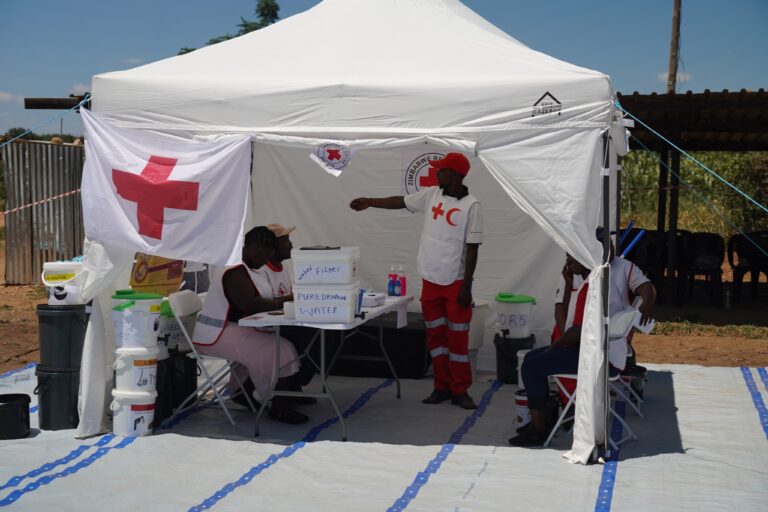
They include community-based Oral Rehydration Therapy (ORT), delivered at the household level via Oral Rehydration Points (ORPs), ensuring timely access to lifesaving care, emergency water, sanitation and hygiene (WASH) interventions: Implemented in affected households and surrounding areas to stop transmission.
It also consists of supporting Oral Cholera Vaccination (OCV) campaigns, including community mobilisation, social mobilisation, and logistics assistance,
Aligned with the African Union’s Agenda 2063 and the Continental Framework for Cholera Elimination, IFRC is also investing in multi-hazard anticipatory action to prepare authorities, communities and other concerned stakeholders ahead of cholera outbreaks.
WN/as/APA