



Months ago, it was generally held that Sudan’s civil war belligerents led by two feuding generals had fought themselves to a stalemate.
However, with the territorial gains made by the Sudanese national army against the Rapid Support Forces in recent weeks, there are indications that the tide of the conflict might be turning albeit slowly.
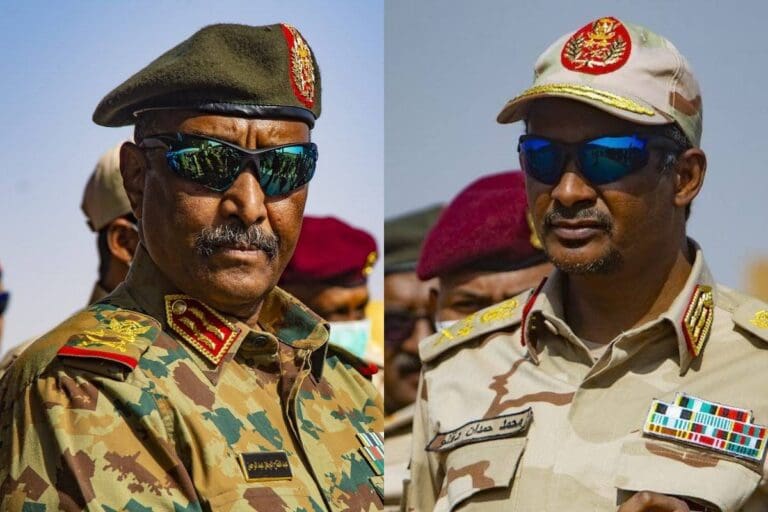
Government troops loyal to junta leader General Abdel Fattah al-Burhan have been fighting to wrest control of some parts of the country from RSF fighters led by General Mohamed Hamdan Dagalo for almost two years.
The two generals, former allies to stage a coup, have been locked in an apparent power struggle since April 2023 and the conflict between their forces has been long fierce and unrelenting.
The capture of the presidential palace in Khartoum from the RSF amid some spectacular successes by Burhan loyalists elsewhere in Sudan may provide the clearest indications that the stalemate may be broken after all these years of fighting which has caused thousands of casualties mostly civilians and prompted the world’s biggest humanitarian crisis.
The palace has been one of the strongholds of the RSF in the Sudanese capital ever since a disagreement over the political transition between Burhan and Hamdan descended into open armed hostilities. The RSF having lost it have announced they are fighting to recapture it.
What is clear however is that soldiers of the Sudanese National Army have found morale from their sweeping successes in recent weeks and carry the momentum into other skirmishes with the RSF whose fighters have suffered the most significant setbacks in the conflict so far.
Triumphant scenes of government troops occupying the palace represents a propaganda coup for Burhan and his forces who have been at pains to cast their adversaries as a “terrorist militia” posing an existential threat to the future of Sudan.
This to the junta is especially crucial to the indivisibility of Sudan after report emerged earlier this month that the RSF was working toward forming a parallel government reminiscent of the political crisis in crisis-torn Libya where rival authorities have exerted control of their territories from Tripoli in the north and Benghazi in the east.
However given the access to weapons by the RSF and the backing from abroad, this conflict looks far from being decided on the battlefront. There are still pockets of RSF resistance in and around Khartoum from where some of its fighters have been pushed to the outer limits of the city.
RSF personnel who still hold pockets of space near the presidential palace not far from the city center, and a part of the airport compound have demonstrated their capability to strike at Sudanese army positions.
Several people were killed including soldiers and journalists after heavy shelling near the presidential palace which the RSF have vowed to take back.
Large parts of the country still remain divided along the lines of the battlefield exploits of the two forces at war. While SNA retains control of territories in the north and east of the country, the RSF still holds the region of Darfur in the west and a large chunk of the south.
The outcome of skirmishes over the city of El Fasher remains undecided with RSF holding strong there despite repeated attempts by SNA soldiers to overrun it.
So far several efforts to mediate an end to hostilities have failed and according to a report on the conflict by the International Crisis Group, both sides have demonstrated a determination to fight on irrespective of the outcome on the battlefield.
With the RSF and its allies signing an agreement in the Kenyan capital Nairobi earlier in March to set up a rival administration in one of their strongholds inside Sudan, the international community have warned that this would most likely split the country into two halves and prolong the nightmare for civilians who have suffered violations from both sides of the conflict divide.
WN/as/APA