



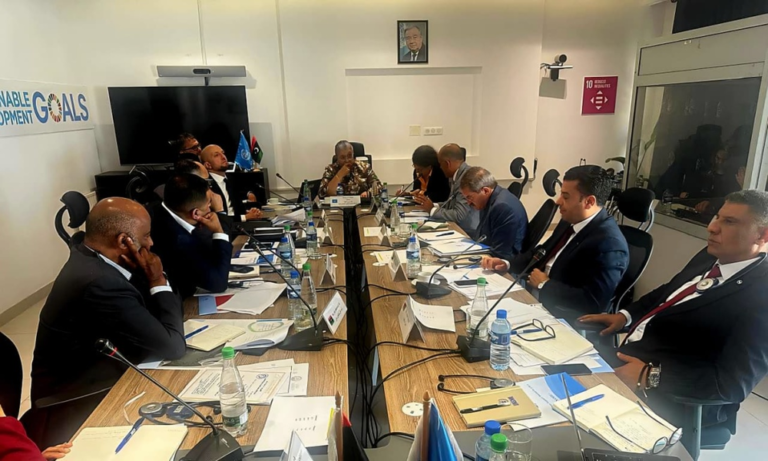
The work of the “4+4” restricted dialogue committee has resumed in Tunisia under the auspices of the United Nations Support Mission in Libya (UNSMIL).
The aim is to keep the electoral legislation firmly on the agenda and defining a consensual framework for the organisation of future national elections in Libya.
According to UNSMIL, participants in the new meeting of the “4+4” committee in Tunisia are reviewing the legal provisions governing the Libyan electoral process as well as an implementation timeline that could secure the backing of the various Libyan stakeholders involved.
The committee brings together representatives from Libya’s main institutions and political actors. The talks include members of the High Council of State, representatives of the Government of National Unity (GNU) based in Tripoli, as well as delegates from the rival eastern administration backed by Field Marshal Khalifa Haftar.
This latest meeting follows a previous session held in Tunisia on 4 May. At the end of that meeting, the UN mission described the exchanges as constructive regarding the constitutional and legal foundations of elections, with participants agreeing to continue consultations and reconvene in June.
The talks are part of a broader process launched several months ago to break Libya’s political deadlock, which has prevented the holding of national elections.
During a meeting held in Rome in April, the committee reached an agreement on restructuring the board of the High National Electoral Commission. Participants recommended that the Attorney General appoint a magistrate recognised for competence, integrity and impartiality to chair the institution.
The committee also proposed several candidates from the House of Representatives and the High Council of State to serve on the future board of the electoral commission.
Participants stressed the need to end the political stalemate and adopt consensual and workable electoral laws, seen as an essential step toward holding nationwide elections.
MK/AK/Sf/lb/as/APA