



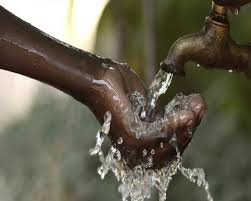
A new United Nations University-linked report says the world has moved beyond periodic water shortages into a deeper and more persistent state of “water bankruptcy”.
The Global Water Bankruptcy Report (2026), released by the UN University Institute for Water, Environment and Health, argues that the term “water crisis” no longer captures the scale of long‑term depletion.
The report defines water bankruptcy as a “persistent post-crisis condition… in which long-term water use has exceeded renewable inflows and safe depletion limits, causing irreversible or effectively irreversible degradation.”
It notes that nearly three‑quarters of the world’s population now lives in water‑insecure countries.
Since 1970, the planet has lost 410 million hectares of wetlands – an area the size of the European Union—at an estimated economic cost of US$5.1 trillion.
Glacier mass has fallen by more than 30 percent and 70 percent of major aquifers are in long‑term decline.
Africa’s water crisis has intensified over the past two decades, driven by rapid population growth, climate‑induced shocks, deteriorating infrastructure and chronic under‑investment in water systems.
More than 400 million people on the continent lack access to safe drinking water and utilities struggle to keep pace with rising demand as rainfall patterns become increasingly erratic.
Climate change has accelerated the decline of Africa’s major water sources.
Prolonged droughts in the Horn of Africa, shrinking river flows in southern Africa and repeated failures of seasonal rains have pushed many countries into long‑term water stress.
Major river basins such as the Nile, Niger, Limpopo and Zambezi are experiencing reduced inflows while groundwater reserves are being depleted faster than they can recharge.
Infrastructure losses compound the crisis. Ageing pipes, leaking networks and weak metering systems mean that a significant share of treated water never reaches consumers.
Many utilities cannot recover operating costs, leaving them dependent on government subsidies that delay essential repairs and upgrades.
Urbanisation has added pressure. Cities such as Lagos, Nairobi, Dar es Salaam and Johannesburg have expanded far beyond the capacity of their water systems, resulting in rationing, tanker dependence and periodic service collapse.
Rural communities face even greater vulnerability, relying on boreholes and seasonal streams that are increasingly unreliable.
Agriculture – Africa’s largest water user – remains highly inefficient, with outdated irrigation systems and high evaporation losses.
Mining, thermal power generation and rapidly expanding infrastructure are intensifying competition for scarce water resources.
Regional bodies and development banks have warned that without major investment in nature‑based solutions, water‑loss reduction and climate‑resilient infrastructure, Africa risks entering a prolonged period of structural water scarcity.
The Global Water Bankruptcy Report (2026) situates these trends within a global pattern of irreversible depletion, arguing that Africa’s utility data already reflects the shift from crisis to bankruptcy.
JN/APA