





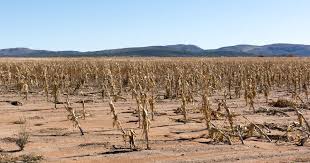
Ethiopia has experienced record poor rainfall during its June-to-September rainy season that could cause in exceptional drought conditions across nearly all rain-receiving areas, the Famine Early Warning Systems Network (FEWS NET) has warned.
In its August 2026-January 2027 Food Security Outlook Update issued on Tuesday, FEWS NET, said the El Niño linked climate condition is threatening the country’s main harvest season (Meher), with the expectation of below-average crop production after rainfall deficits exceeded 50 percent of average across much of the country.
“The main harvest, known as meher, accounts for more than 85 percent of national crop production and is expected to be below average, reducing food stocks and income from agricultural labor,” the statement said, noting that the poor rains delayed planting and damaged crop development, particularly in northern, central and eastern Ethiopia.
FEWS NET expects Crisis (IPC Phase 3) food insecurity outcomes to persist across many drought-affected cropping and pastoral areas through January 2027, with some households likely to face Emergency (IPC Phase 4).
It said the October harvest is expected to temporarily improve food and income access in parts of central and southern Ethiopia, but limited production and is expected to sustain Crisis conditions in the worst-affected northern and eastern areas.
Ethiopia is entering the 2026-2027 El Niño periods amid already severe humanitarian pressures, with millions of people facing the combined effects of conflict, displacement, drought, economic difficulties and repeated disruptions to agricultural production. The anticipated climate shocks are raising concerns over further deterioration in food security and livelihoods in vulnerable areas.
The situation emerged as Ethiopia braced for the effects of a forecast El Niño event, raising concerns over further deterioration in water availability, livestock conditions and pastoral livelihoods in drought-prone areas.
The Food and Agriculture Organization of the United Nations (FAO) recently announced that it is seeking $50 million to assist 4.66 million people facing worsening food insecurity and livelihood loses as Ethiopia prepares for impacts of the forecast El Niño event.
The UN World Food Program has warned that climate shocks associated with broader El Niño system could significantly worsen food insecurity across vulnerable regions, particularly in East and Southern Africa, where millions of people are already living with the consequences of repeated droughts, floods and conflict.
MG/abj/APA