



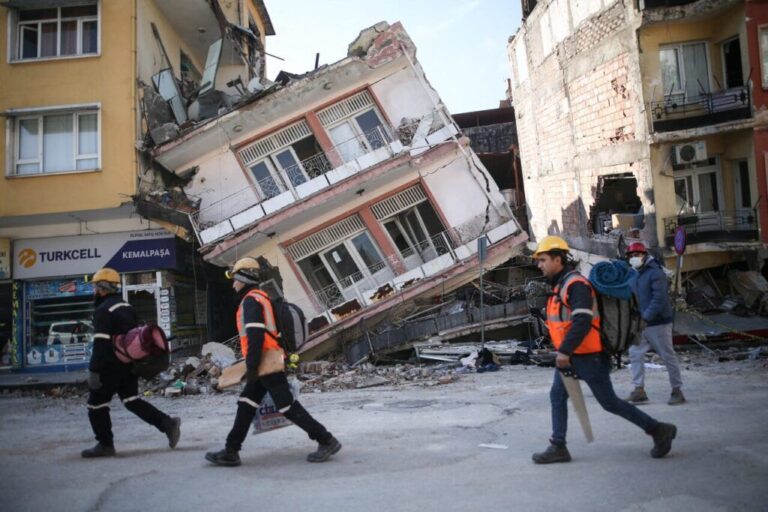
Japanese rescuers are still scrambling to reach possible survivors three days after a devastating earthquake in Japan.
A powerful earthquake struck south-western Japan on Tuesday, July 28, on the island of Kyushu, claiming several lives and causing significant property damage, according to Japanese authorities and emergency services.
The earthquake, measured at a magnitude of 7.1 by the Japan Meteorological Agency (JMA), primarily affected Kumamoto Prefecture, where the maximum intensity of level 7 on the Japanese Shindo scale was recorded in some areas.
A tsunami warning was issued after the quake for several coastal areas, particularly around the Ariake and Yatsushiro Seas, before being lifted a few hours later after no dangerous waves were detected.
Authorities report dozens of deaths and injuries, while search and rescue operations continue in the hardest-hit areas.
Buildings have been destroyed or severely damaged, roads have been cut off, and public infrastructure has been disrupted.
The earthquake also caused power and water outages in several towns, as well as disruptions to rail service, particularly on certain Shinkansen high-speed rail lines.
Japanese authorities remain highly vigilant regarding the risk of aftershocks, which are common following an earthquake of this magnitude. Japan, located on the Pacific Ring of Fire, is among the countries most vulnerable to seismic risks in the world.
AC/Sf/fss/as/APA