



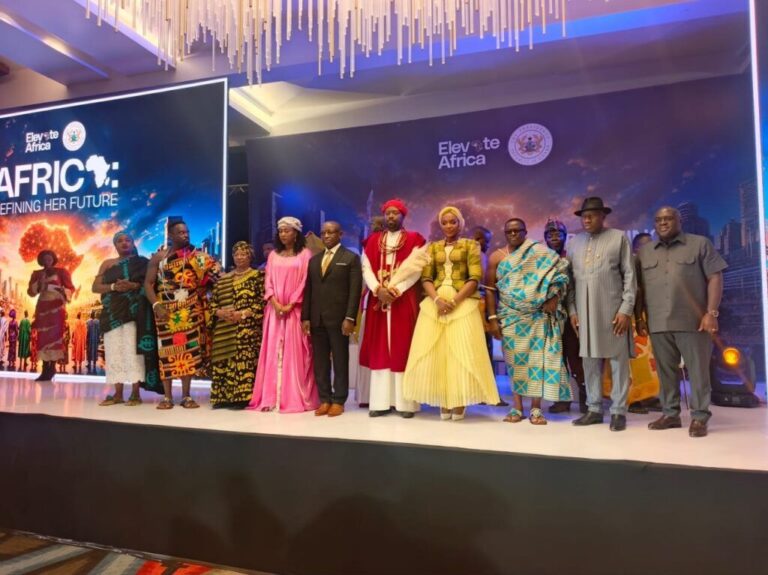
African leaders and former heads of state gathered in Accra on Wednesday to advocate for leadership rooted in a long-term vision, the development of human capital, and the economic
transformation of the continent.
The discussions took place at the opening of the “Elevate Africa Annual Convening 2026,” held under the theme “Africa Defines Its Future,” as reported by APA.
Speaking at the event, Sierra Leonean President Julius Maada Bio argued that the current generation of leaders must imbue the political independence won by their predecessors with greater economic substance.
“Their struggle secured our political independence. Our struggle – the struggle of this generation – is to give that independence a deeper economic dimension and ensure it improves the lives of our people,” he stated.
According to President Bio, shifts in global economic relations, mounting challenges in securing development financing, and rapid technological transformation require African nations to more
effectively defend their own interests.
He urged the continent to approach these changes with confidence and to make decisions that will
expand opportunities for future generations.
Former Nigerian President Goodluck Jonathan emphasised the necessity of a clear vision and long-term planning to guide public policy. He stressed that African countries must strengthen their institutions, promote integrity in public administration, and prioritise competence when appointing individuals to positions of responsibility.
Pointing to the development trajectories of Singapore and India, he highlighted the critical role of education, talent development, and the mobilisation of scientific and technological expertise in driving progress.
He argued that Africa must invest in its human capital to design and produce its own technologies, rather than merely importing and consuming those developed elsewhere. “We must be capable of
designing and manufacturing technologies in Nigeria, Ghana, and elsewhere in Africa,” he asserted, calling for the creation of institutions equipped to train the talent needed for the continent’s
industrialisation.
Former Mauritian President Ameenah Gurib-Fakim also highlighted the structural obstacles to Africa’s economic transformation – notably the lack of investment in science and technology, as well as inadequate economic and scientific infrastructure.
She pointed out that the fragmentation of African markets hinders long-term investment and the financing required for innovation. In this regard, she presented the African Continental Free Trade Area (AfCFTA) as a catalyst for expanding markets, fostering industrialisation, and boosting intra-African trade.
Ultimately, she argued, the continent’s economic transformation depends on its ability to bridge its scientific and technological gap, cultivate skills tailored to the needs of its economies, and develop
manufacturing activities capable of creating productive jobs.
Leadership Measured by Results
In his opening address, Ogiame Atuwatse III, the 21st Olu of Warri and co-founder of Elevate Africa, urged leaders to evaluate their legacy based on the opportunities they leave behind for future generations.
“History will judge us less by what we possess than by what we have built, and less by what we have inherited than by what we have passed on,” he declared.
The traditional Nigerian ruler called for greater investment in talent, expanded access to opportunities, and the creation of environments where skills and merit take precedence over personal connections.
He also urged the African diaspora to contribute to the continent’s development through their knowledge, mentorship, and professional networks – going beyond mere financial support.
The mayor of Tema, Ebi Bright, emphasised the role of local governance in realising continental ambitions. She argued that major policies – particularly those concerning economic integration –
cannot be effective without local institutions capable of translating them into concrete results for the people.
She specifically called on leaders to ensure that commitments made during high-level meetings are transformed into tangible improvements within markets, schools, and communities.
An anticipated declaration on African leadership
The gathering, founded in 2024 by Ogiame Atuwatse III and his wife, Olori Atuwatse III, brings together political leaders, investors, cultural figures, representatives of the diaspora, and young leaders to focus on three key pillars: leadership and governance; trade and investment; and culture and heritage.
A presidential roundtable titled “Promoting African Leadership” is set to feature Julius Maada Bio, Goodluck Jonathan, Ameenah Gurib-Fakim, and former Malawian President Joyce Banda, moderated by BBC journalist Waihiga Mwaura.
The discussions are expected to culminate in the Accra Declaration. In his welcome message, the traditional Ga ruler, Tackie Teiko Tsuru II – represented by an emissary – called for the text to be anchored in institutional mechanisms and operational commitments capable of yielding concrete results for African youth.
Proceedings continue on Thursday, focusing on the creative economy, youth, and the diaspora, with discussions dedicated in particular to African music, cinema, fashion, and digital content.
AC/fss/as/APA