



Seeking a consensus and engaging in constructive dialogue are essential tools for restoring political stability in Libya and charting a sustainable future for the nation.
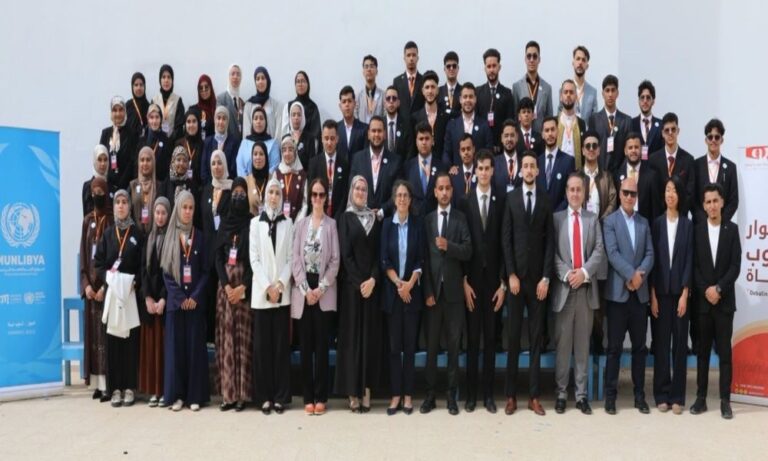
This imperative was highlighted on Sunday in Misrata during the launch of an institutional simulation, which brought together fifty young men and women from all regions of Libya.
Organised as part of the United Nations Day celebrations, the initiative spans three days of workshops and interactive debates.
The program centres on three distinct simulation sessions that faithfully replicate the operational mechanisms of the Security Council, the General Assembly, and the Economic and Social Council.
These practical exercises allow aspiring diplomats to explore divergent positions, critically analyse opposing viewpoints, and develop realistic compromises.
The primary objective is to learn the art of negotiation and to find common ground when faced with complex crises.
The country’s recent political experience demonstrates, day after day, just how challenging it is to reach a solid consensus. Only ongoing dialogue and a willingness to compromise can pave the way for viable political solutions.
The skills cultivated during these sessions – focusing on mediation, active listening, and conflict management – serve as vital foundations for peacebuilding.
These training efforts aim to foster the inclusion of all societal stakeholders in resolving the Libyan conflict.
The youth – represented here by delegates from every province – bear the responsibility of shaping the institutional and economic framework for the decades to come.
The commitment of new generations to mastering the tools of participatory diplomacy strengthens confidence in the country’s ability to overcome current divisions and establish a peaceful, lasting political climate.
MK/AK/Sf/fss/as/APA