



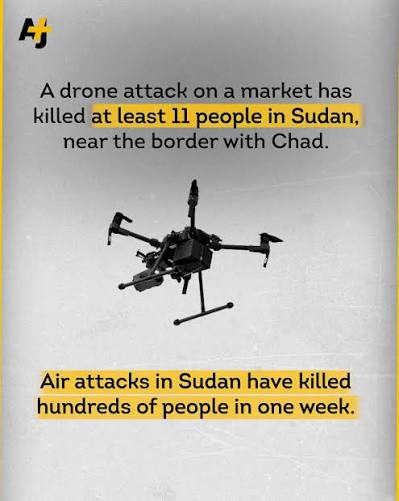
Drone attacks in Sudan claimed the lives of more than 1,630 civilians between January and the end of October 2026, accounting for nearly 75% of the 2,230 deaths recorded during that period.
According to a report by the Office of the United Nations High Commissioner for Human Rights (OHCHR) released on Tuesday, the document highlighted a concerning shift in the war, which has pitted the Sudanese army against the Rapid Support Forces (RSF) since April 2023: an increasing use of drones to strike civilian targets and essential infrastructure, even far from active combat zones.
This new mode of warfare has significantly expanded the scope of the violence. Both sides now employ these devices to reach positions hundreds of kilometres from their bases, further exposing civilian populations to bombardment.
The Kordofan region, in the centre and south of the country, accounts for more than two-thirds of the documented civilian casualties, followed by Darfur in the west.
During the first half of 2026, UN investigators documented 39 drone strikes on markets, 20 on civilian vehicles, 17 on fuel tankers and fuel depots, and 16 on healthcare facilities.
“The findings of this report provide further evidence of the relentless and unbearable civilian suffering caused by the war in Sudan,” stated UN High Commissioner for Human Rights Volker Türk, who also condemned the warring parties’ disregard for the rules of war.
The consequences of these attacks extend well beyond the human toll.
Strikes against markets and supply chains are exacerbating food shortages and hindering the delivery of humanitarian aid in a country already facing a severe food crisis.
In October, the Integrated Food Security Phase Classification (IPC) warned of the risk of famine in certain areas of Darfur and Kordofan.
Energy infrastructure and water supply networks are also under threat.
Between October 20 and November 4, the UN documented 29 drone attacks attributed to the Rapid Support Forces (RSF) – targeting electrical facilities and gas stations across 11 Sudanese states.
These bombardments threaten the operation of hospitals and compromise the population’s access to electricity, water, and fuel, further compounding the impact of a war that has already severely weakened essential services.
The Office of the UN High Commissioner for Human Rights (OHCHR) suggests that some of the documented violations may amount to war crimes, and it condemns the persistent impunity enjoyed by the alleged perpetrators.
The report further notes that the influx of weapons and external support is helping to sustain and expand the hostilities.
In light of this escalation, Volker Türk has called on the warring parties to respect international humanitarian law and protect civilians, emphasizing the need to hold those responsible for violations accountable – regardless of which side they belong to.
TE/Sf/fss/gik/APA