



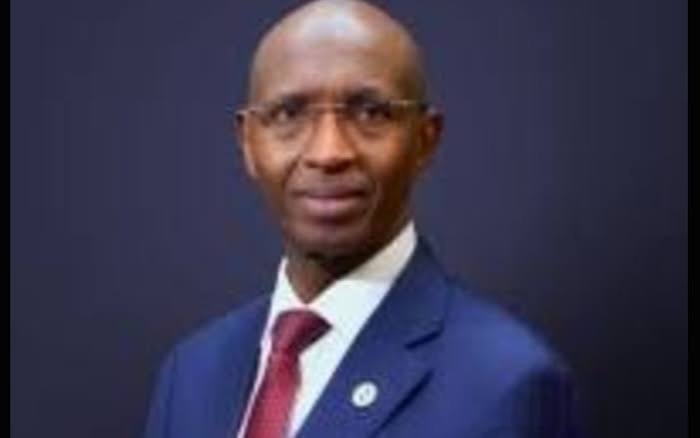
The Regional Chair for Africa, World Energy Council, Dr. Omar Farouk Ibrahim, has called on African countries to take responsibility for their energy future by strengthening financing, developing indigenous technology and building regional energy infrastructure.
Delivering the 14th Anniversary Lecture of RealNews Magazine in Lagos on Thursday, Dr. Ibrahim said that Africa’s energy insecurity was not fundamentally caused by a shortage of resources, but by inadequate financial capacity, technological capabilities and market infrastructure.
According to him, the continent possesses substantial oil and gas reserves, enormous solar resources, hydropower potential, wind, geothermal energy and critical minerals.
He, however, noted that Africa continued to experience the world’s greatest energy-access deficit despite its abundant resources.
Speaking on the theme of the lecture “Geopolitical Turbulence and Energy Security: Forging Strategic Opportunities for Africa”, Ibrahim cited the 2026 Tracking SDG 7 Report, which drew on 2024 data, that said that more than 560 million people in sub-Saharan Africa lacked electricity access.
He added that approximately 970 million people lacked access to clean cooking.
While he identified financing, technology and market infrastructure as three major challenges confronting Africa’s energy sector, the former Secretary-General of the African Petroleum Producers’ Organisation (APPO) said that the organisation had commissioned a study during his tenure to examine the industry’s prospects amid changing international financing policies, technological trends and market conditions.
He said that the study informed the conception of three initiatives: the Africa Energy Bank, the Central Africa Pipeline System (CAPS) and regional centres of excellence in oil and gas research and technology.
According to Ibrahim, geopolitical tensions, armed conflicts, supply-chain disruptions and the global energy transition had transformed energy from a mere commodity into an instrument of national security, economic resilience and geopolitical influence.
He cited the Russia-Ukraine conflict and the 2026 Middle East crisis as examples of developments exposing the vulnerability of international energy markets.
He stated that about 20 million barrels of crude oil and petroleum products transited the Strait of Hormuz daily in 2025, alongside a significant share of global liquefied natural gas trade.
He said that disruptions along such strategic corridors affected prices, freight and insurance costs, trade balances and investment decisions worldwide.
The energy expert explained that higher crude oil prices could increase export earnings for African oil-producing countries but also raise the costs of imported fuel, food, equipment and transportation.
He said petroleum-producing countries remained vulnerable when they depended on imported refined products or lacked adequate domestic storage and distribution systems.
Ibrahim stressed that energy security should encompass reliable physical supply, infrastructure resilience, diversified energy sources, affordability and the capacity to withstand external shocks.
He called for a balanced energy transition that recognised Africa’s development needs and different circumstances from those of industrialised economies.
He said African countries should expand renewable energy, improve efficiency and reduce emissions, while responsibly utilising oil and gas for electricity, fertiliser production, petrochemicals and industrial development.
“Our energy transition must be a transition from energy poverty to energy prosperity, not from energy poverty to deeper deprivation,” he said.
GIK/APA