



Morocco on Friday welcomed the non-renewal of MINURSO’s mandate by the Security Council, describing the development in a Royal Cabinet statement as “a significant step towards definitively closing the Moroccan Sahara dossier at the United Nations”.
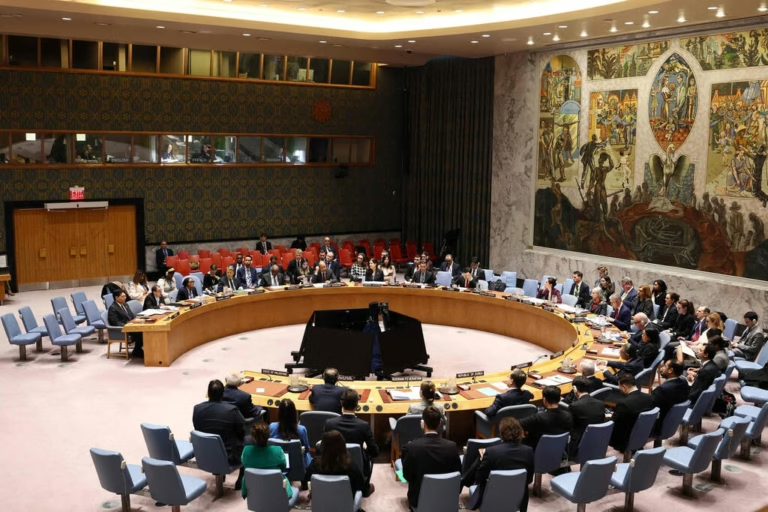
The statement followed the failure of two competing draft resolutions at the Council. A US-sponsored text was blocked by a Russian veto, while a Russian counterproposal secured only three votes in favour and drew a negative vote from the United States.
The Royal Cabinet described the outcome as a turning point in the handling of the Sahara issue. It linked the development to Unity Day, established by royal decree on 4 November 2025, and to an effort to reshape the parameters of the dispute.
According to the statement, the non-renewal should lead, in the coming days, to the end of the mission’s presence in the kingdom’s southern provinces, including the withdrawal of its personnel, vehicles, equipment and insignia.
The cabinet said this would bring a 35-year chapter to a close. It also argued that the development should lead to the removal of the Western Sahara issue from the UN Security Council’s agenda, ending periodic meetings, reports by the Secretary-General and briefings by his personal envoy devoted to the issue.
It described the UN political process as now suspended and announced steps involving other UN bodies. Morocco reaffirmed its commitment to the ceasefire while upholding the kingdom’s territorial integrity, national security and the tranquillity of its citizens. Diplomatic efforts led by the king will continue at the bilateral and regional levels, the cabinet said.
According to the statement, more than two-thirds of UN member states support autonomy under Moroccan sovereignty as the sole framework for a settlement. Two drafts fail to pass The US draft received eleven votes in favour. China, Pakistan and Somalia abstained, while Russia exercised its veto, blocking adoption despite majority support.
Washington had proposed extending the mission until 31 October 2027 and renaming it the “United Nations Mission in Western Sahara” (MINUSO) from 1 November, removing the reference to a referendum from its name.
The draft identified Morocco’s autonomy plan as the sole basis for further negotiations. It also requested that the Secretary-General submit proposals on the mission’s structure, staffing and resources before 30 January 2027, and provided for the registration of the population of the Tindouf camps within six months.
Russia’s counterproposal sought a one-year extension of MINURSO without changing its name or mandate. It received three votes in favour, eleven abstentions and one vote against, cast by the United States.
It therefore also fell short of the nine affirmative votes required for adoption. Neither draft was adopted, leaving the mission without an approved extension ahead of the expiry of its current mandate on 31 October.
The UN Security Council comprises fifteen members. Its five permanent members, each holding veto power, are China, France, Russia, the United Kingdom and the United States.
The ten elected members in 2026 are Bahrain, Colombia, Denmark, the Democratic Republic of the Congo, Greece, Latvia, Liberia, Pakistan, Panama and Somalia.
KK/fss/as/APA