



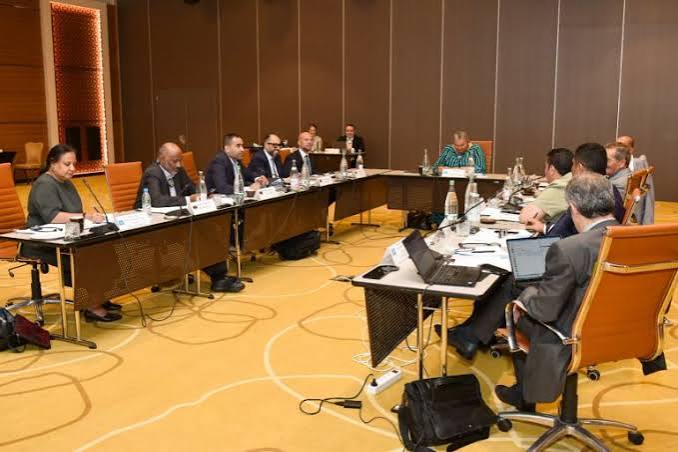
The Libyan High Council of State rejected several texts adopted by the House of Representatives as part of the “4+4” agreement, considering that electoral changes must still follow the constitutional and institutional procedures provided.
The Libyan High Council of State (HCS) examined Law No. 4 of 2026 adopted by the House of Representatives and notably amending the provisions relating to the election of the head of state.
In a statement published on Tuesday, he described this text as “unconstitutional” and also contested other legislative amendments and decisions linked to the electoral process and the conclusions of the “4+4” meeting of August 30.
The HCS affirms that the organization of elections cannot be dissociated from the establishment of a constitutional and legal framework considered sufficiently solid.
He specifies that his opposition to the amendments to the electoral law is not aimed at delaying the vote, but to request that the modifications be adopted through a clear institutional process accepted by the two main Libyan legislative institutions.
According to the Council, the 13th constitutional amendment established a participation mechanism between the House of Representatives and the High Council of State, in particular through the “6+6” committee.
In this reading, the conclusions of the “4+4” meeting, devoted to the electoral framework and the reconstitution of the council of the High National Electoral Commission, still constitute a “political agreement” whose translation into final standards would require the completion of institutional and legal procedures by both chambers.
The HCS thus called on the House of Representatives to continue consultations on the electoral framework in order to achieve a broader consensus and limit disputes likely to affect the legitimacy of future elections and their results. He also called on the United Nations Support Mission in Libya (UNSMIL) to maintain its facilitating role in respecting Libyan institutions and constitutional mechanisms.
For its part, the House of Representatives adopted several texts following the agreement resulting from the “4+4” mini-dialogue, including a modification of the rules relating to the presidential election.
The text provides for the simultaneous holding of presidential and legislative elections within a maximum period of 24 months after the installation of a unified executive power responsible for supervising the process. The presidential election would be organized in two rounds, unless a candidate obtains an absolute majority in the first round, set at 50% of the votes plus one.
MK/AK/Sf/fss/gik/APA