





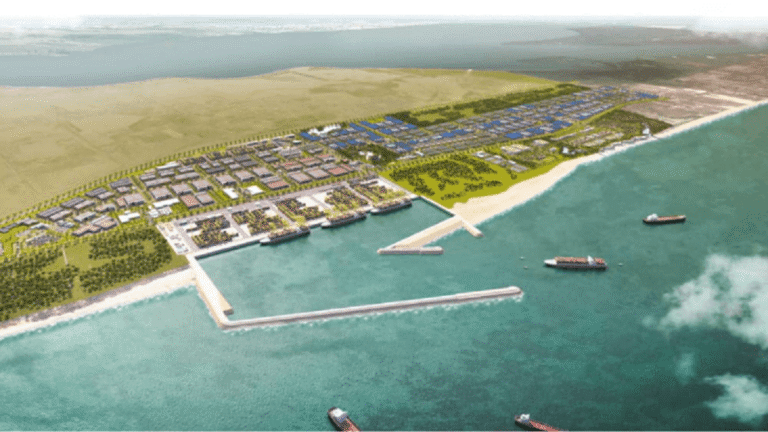
Nigeria’s first private special economic zone developed by Tolaram, the Lagos Free Zone, has been described as the most attractive investment destination for Nordic companies seeking to establish a presence in Nigeria’s fast-evolving economy.
The Chief Executive Officer of the Lagos Free Zone, Mrs Adesuwa Ladoja, made this declaration during the Nordic Nigeria Connect 2025 conference held in Lagos.
Speaking at a panel discussion, Mrs. Ladoja highlighted the unique advantages that set the zone apart from other business locations in Nigeria, emphasising its efficient infrastructure, regulatory clarity, and seamless logistics.
According to Ladoja, LFZ offers investors an environment where business predictability and operational efficiency replace the uncertainty and bureaucratic delays often encountered elsewhere.
“For Nordic companies viewing Nigeria as a strategic hub, Lagos Free Zone stands as the ideal destination. It provides the infrastructure, enabling environment, and logistics capacity required for sustainable success,” she said.
According to the statement by the LFZ, the zone’s integrated Lekki Deep Sea Port, equipped with world-class facilities, gives investors an unmatched advantage in both imports and exports.
When you set up within the Zone, you can easily export your products or import raw materials without logistical delays. With new access roads, coastal routes, and planned rail connectivity, movement will become even smoother.
Additionally, our single-window regulatory system brings all key agencies together within the Zone, making it easier for investors to operate,” she explained.
Ladoja further praised recent economic reforms under President Bola Tinubu’s administration, noting that the removal of fuel subsidies and the unification of the exchange rate have created a more transparent, market-driven economy.
These reforms, she said, have strengthened investor confidence and restored predictability to the business climate.
She observed that Nigeria’s economic fundamentals are showing positive signs, including currency stability, declining inflation, and lower interest rates, all of which signal that private-sector growth and capital formation are regaining momentum.
With a young, entrepreneurial population and access to the 400-million-strong ECOWAS market, Nigeria, she added, offers both a robust consumer base and a strategic production platform.
“This dynamic mix of structural reforms, market stabilization, and demographic strength makes Nigeria one of Africa’s most attractive destinations for investment. The real advantage lies in being an early mover, those who establish a foothold now will benefit most as infrastructure and industry evolve,” she noted.
Ladoja also emphasized the natural alignment between Nordic expertise and Nigeria’s development priorities.
Nigeria’s first private special economic zone developed by Tolaram, the Lagos Free Zone, has been described as the most attractive investment destination for Nordic companies seeking to establish a presence in Nigeria’s fast-evolving economy.
The Chief Executive Officer of the Lagos Free Zone, Mrs Adesuwa Ladoja, made this declaration during the Nordic Nigeria Connect 2025 conference held in Lagos.
Speaking at a panel discussion, Mrs. Ladoja highlighted the unique advantages that set the zone apart from other business locations in Nigeria, emphasising its efficient infrastructure, regulatory clarity, and seamless logistics.
According to Ladoja, LFZ offers investors an environment where business predictability and operational efficiency replace the uncertainty and bureaucratic delays often encountered elsewhere.
“For Nordic companies viewing Nigeria as a strategic hub, Lagos Free Zone stands as the ideal destination. It provides the infrastructure, enabling environment, and logistics capacity required for sustainable success,” she said.
According to the statement by the LFZ, the zone’s integrated Lekki Deep Sea Port, equipped with world-class facilities, gives investors an unmatched advantage in both imports and exports.
When you set up within the Zone, you can easily export your products or import raw materials without logistical delays. With new access roads, coastal routes, and planned rail connectivity, movement will become even smoother.
Additionally, our single-window regulatory system brings all key agencies together within the Zone, making it easier for investors to operate,” she explained.
Ladoja further praised recent economic reforms under President Bola Tinubu’s administration, noting that the removal of fuel subsidies and the unification of the exchange rate have created a more transparent, market-driven economy.
These reforms, she said, have strengthened investor confidence and restored predictability to the business climate.
She observed that Nigeria’s economic fundamentals are showing positive signs, including currency stability, declining inflation, and lower interest rates, all of which signal that private-sector growth and capital formation are regaining momentum.
With a young, entrepreneurial population and access to the 400-million-strong ECOWAS market, Nigeria, she added, offers both a robust consumer base and a strategic production platform.
“This dynamic mix of structural reforms, market stabilization, and demographic strength makes Nigeria one of Africa’s most attractive destinations for investment. The real advantage lies in being an early mover, those who establish a foothold now will benefit most as infrastructure and industry evolve,” she noted.
Ladoja also emphasized the natural alignment between Nordic expertise and Nigeria’s development priorities.
She said that Nordic strengths in renewable energy, sustainable manufacturing, logistics, and digital innovation complement Nigeria’s economic diversification goals. Such collaboration, she noted, can drive innovation, job creation, and inclusive growth.
Ladoja commended the Nordic countries for their leadership in clean technology, digital transformation, and ethical business practices, describing them as models that align with Nigeria’s aspirations for sustainable development and responsible investment.
GIK/APA
She said that Nordic strengths in renewable energy, sustainable manufacturing, logistics, and digital innovation complement Nigeria’s economic diversification goals. Such collaboration, she noted, can drive innovation, job creation, and inclusive growth.
Ladoja commended the Nordic countries for their leadership in clean technology, digital transformation, and ethical business practices, describing them as models that align with Nigeria’s aspirations for sustainable development and responsible investment.
GIK/APA