





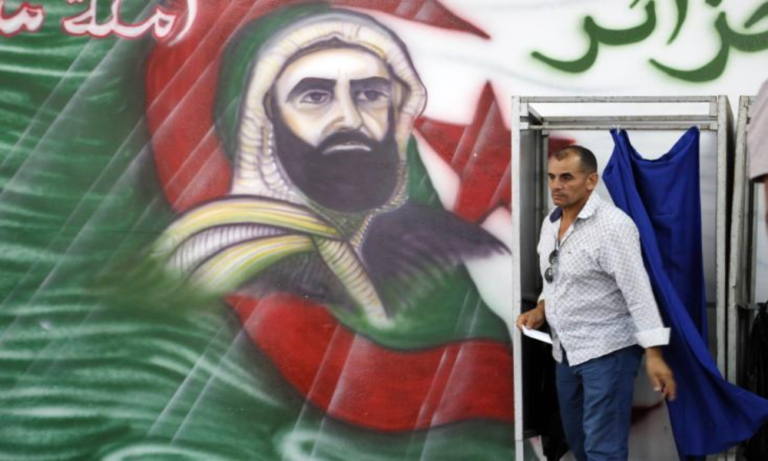
The provisional voter turnout for the Algerian parliamentary elections stood at 20.79%, according to the National Independent Election Authority (ANIE), a level lower than that recorded in the previous 2021 election and potentially a historic low.
The ANIE announced late Thursday night that the provisional voter turnout for the parliamentary elections in Algeria had reached 20.79%, a level which, if confirmed after the final count, would be the lowest recorded since the introduction of multi-party politics in the country.
“These figures are provisional” and “will certainly change,” said Karim Khelfane, ANIE’s interim president, in a statement broadcast on the institution’s Facebook page.
Faced with what was considered limited voter turnout, the authorities extended voting hours by one
hour across the country to allow voters to exercise their right to vote.
Nearly 25 million voters were called to the polls to elect the 407 members of the National People’s Assembly (APN) for a five-year term. Parties traditionally close to the government, notably the
National Liberation Front (FLN), appear to be the favourites to retain their dominant position in the future lower house of Parliament.
Official results are expected in the coming days.
The election took place amidst a lacklustre campaign and controversies surrounding the invalidation of approximately one-third of the candidate lists, with several political parties denouncing their
exclusion in certain constituencies, particularly in Algiers.
In the capital, several polling stations remained sparsely attended throughout the day, according to observations by AFP journalists.
President Abdelmadjid Tebboune, quoted by the official APS news agency, stated that the elections were proceeding smoothly.
Interior Minister Said Sayoud called on citizens to turn out in large numbers to vote, without commenting on the turnout, according to the news website TSA.
During the previous parliamentary elections held in 2021, the official turnout was 23%, already considered the lowest in the country’s history.
These elections took place in the wake of the Hirak popular movement, which began in 2019 and led to the resignation of President Abdelaziz Bouteflika.
Since then, several human rights organisations have argued that public space has gradually become more restricted, while the authorities emphasize institutional stability and the continuation of reforms initiated under the presidency of Abdelmadjid Tebboune.
MK/AK/Sf/fss/as/APA