



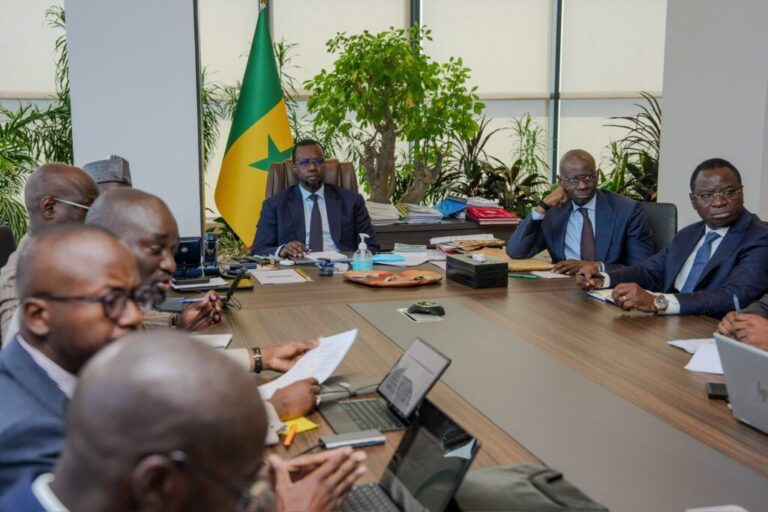
Prime Minister Ousmane Sonko chaired a special meeting on Tuesday dedicated to the petroleum product situation in Senegal, against an international backdrop of military escalation in the Middle East.
This meeting came two days after a video statement from the head of government, who is also the president of the Pastef Les Patriotes party, in which he warned of serious global and African economic disruptions linked to the intensification of the conflict in the Middle East.
He emphasised that countries dependent on hydrocarbon imports, such as Senegal, could suffer significant repercussions, affecting investment, capital flows, financial markets, and food security.
In December 2025, petroleum product imports remained significant despite a general decline in total imports (-24.6% year-on-year).
Russia remains the leading supplier of energy and lubricants (34.9 billion CFA francs), ahead of Spain (9.7 billion) and France (9.5 billion), the latter recording the strongest year-on-year growth (+244.8%).
The war intensified after a joint operation by US and Israeli forces targeted several strategic installations in Iran on February 28, resulting in the death of Iran’s Supreme Leader, Ali Khamenei, and several high-ranking military and political officials, according to Iranian official statements.
This elimination triggered a series of retaliatory strikes by Tehran, including missile and drone attacks against Israel and US bases in the Gulf, while Hezbollah fighters, allied with Iran, intensified their attacks against Israel from Lebanon.
The strikes also targeted diplomatic infrastructure, with drone attacks near Western embassies in the region.
This major escalation led to the effective closure of the Strait of Hormuz, disrupting global oil traffic and exacerbating economic tensions.
AC/fss/as/APA