





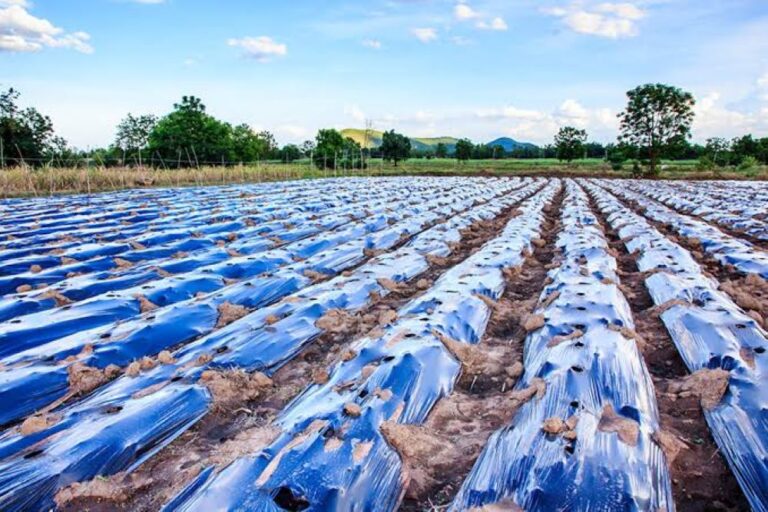
With plastics playing a growing role in food production across Africa, countries on the continent have identified a new problem that inadequate waste management carries with it environmental and health risks.
According to the Food and Agriculture Organization, these countries are stepping up efforts against agricultural plastic pollution.
Gathered at FAO’s regional webinar “The Voluntary Code of Conduct for plastics in agriculture: African experiences and the way forward”, experts from across the continent shared practical solutions and emerging initiatives to reduce the environmental impacts of plastics while maintaining agricultural productivity.
FAO Deputy Regional Representative for Africa, Ayman Omer, pointed to FAO’s Provisional Voluntary Code of Conduct on the Sustainable Use and Management of Plastics in Agriculture (VCoC) as the framework for country action.
“The VCoC provides practical guidance to support countries in developing policies and strategies for agricultural plastics throughout their life cycle. By working together, we can accelerate its implementation and support the transition towards more efficient, inclusive, resilience and sustainable agrifood systems,” Omer said.
A take on individual country action
Country experiences demonstrated both the scale of the challenge and the opportunities for innovation. In Kenya, the FARM project improves lifecycle management of agricultural plastic waste through collaboration among government agencies, producer responsibility organisations, and stakeholders across the agrifood value chain.
For Annastacia Vyalu, Senior Compliance Officer at the National Environment Management Authority (NEMA), Extended Producer Responsibility (EPR) is a practical tool for reducing agriplastic pollution while promoting circularity and resource recovery across agricultural value chains.
The FARM is being piloted in three Kenyan counties and the expectation is to expand nationwide and eventually across East Africa.
As Kenya builds up its collection systems, attention is also turning to specific plastic packaging in the value chain with fertilizer bags as an example of a common source of plastic in agricultural systems which go unmanaged once they are discarded.
What happens to them after use is exercising the minds of national environmentalists.
Killian Banda, Senior Specialist for Market Development and Intelligence at the African Fertilizer and Agribusiness Partnership (AFAP), presented findings from a multi-country study examining this gap.
While the study found broad awareness of plastic pollution among value-chain actors, it also revealed persistent challenges, including weak enforcement of regulations and limited recycling infrastructure. Recommended actions included promoting reusable packaging, strengthening recycling incentives, and exploring biodegradable alternatives.
Testing alternatives
The FAO webinar also highlighted innovative alternatives to conventional plastics.
It examined results from field trials in pineapple production which demonstrated that coconut coir mulch can serve as an effective alternative to conventional plastic mulch.
Presented by Dr Ebenezer Laryea, Associate Professor at Aston University in the United Kingdom, the project, which took place in Ghana, showed that biodegradable alternatives can deliver comparable agricultural performance while reducing plastic waste. With support from FAO, a new phase will test biodegradable seedling bags in cocoa nurseries through 2026.
Participants also pointed out the importance of innovation in fisheries. Drawing on pilot experiences in Kenya, Emma Algotsson, CEO of South African company Catchgreen, presented results from three years of trials, where biodegradable ropes, nets and traps matched the performance of conventional gear. “The challenge is not simply about replacing plastic. The challenge is designing fishing gear that performs reliably during the use but does not remain in the environment for decades,” said Algotsson.
The discussions reinforced a shared message: recycling alone will not solve agricultural plastic pollution. Participants called for affordable alternatives, stronger policy frameworks, improved collection systems, and greater collaboration among public and private stakeholders.
Building on the experiences shared on the webinar, FAO said it will continue supporting countries in implementing the VCoC, including through FARM in Kenya and the next phase of the Ghana coconut-coir project, to accelerate the transition towards more sustainable agrifood systems across Africa.
WN/as/APA