



More than a week after the car bombing that killed Fauzi Al-Mansouri, head of military intelligence for the Libyan National Army, no arrests have yet been made.
This comes despite mounting pressure on the authorities to identify those responsible.
General Mansouri was killed in a car bomb explosion in Benghazi as he was leaving a mosque after evening prayers on August 10, according to the LNA command.
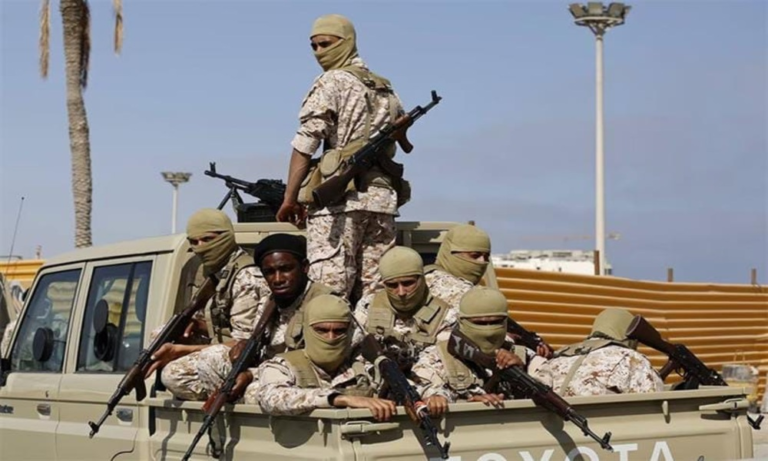
He was head of military intelligence for the Libyan National Army (LNA), commanded by Marshal Khalifa Haftar.
The eastern-based army immediately condemned the attack as a “cowardly and criminal act” but provided no information on the identity of the perpetrators or their motives.
More than a week after the attack, no authority has publicly reported the apprehension of a suspect. The lack of any announced progress has put mounting pressure on the services handling the investigation, given the victim’s rank and the highly sensitive nature of his position.
The case has now gone beyond the remit of authorities in eastern Libya. On Tuesday, speaking before the United Nations Security Council, the UN Secretary-General’s Special Representative for Libya, Hanna Tetteh, condemned the assassination and called for a thorough investigation and for those responsible to be brought to justice. Her appeal comes amid several security incidents reported in different parts of the country.
The assassination of Fauzi Al-Mansouri is particularly concerning for the security apparatus controlled by Haftar.
The LNA exercises authority over eastern Libya and large parts of the south. An attack targeting a senior military intelligence official in Benghazi raises questions about the ability of security forces to prevent targeted operations against high-ranking officials.
The bombing also comes at a time when Libyan and international actors are seeking to revive efforts to reunify the country’s military and political institutions. Recent clashes in the west, drone strikes on the Zawiya oil complex and several assassinations have heightened concerns over a further deterioration in the security situation.
With no arrests announced and no official information on those who may have ordered the attack, the investigation remains shrouded in uncertainty. Its outcome is now a test for the authorities in eastern Libya, who face growing pressure to establish responsibility for one of the most sensitive attacks to have recently struck their security apparatus.
MK/ak/sf/lb/as/APA