



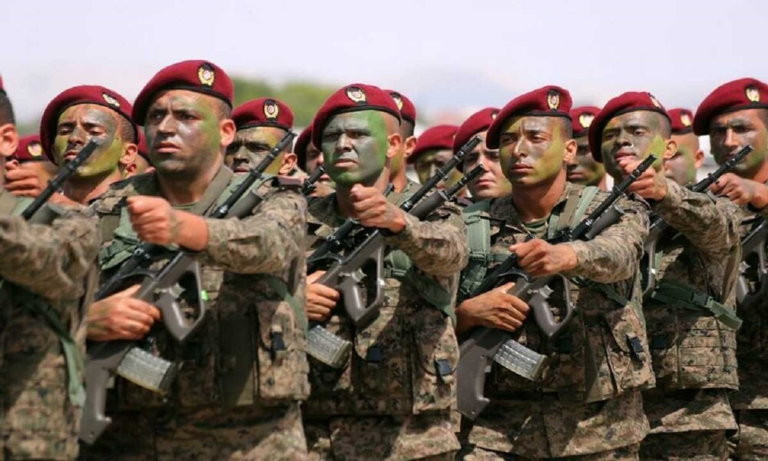
Tunisian authorities are stepping up efforts to bring young people back to compulsory military service, widely evaded, in a drive that combines bolstering troop numbers, modernising the army and tightening measures against draft dodgers.
About fifty young men reported on Monday, October 19, to the military mobilisation centre in Sousse, in eastern Tunisia, to answer their call-up. National service, nominally lasting 12 months and compulsory since 1975 for the Tunisians concerned, has largely been neglected since the 2011 revolution.
Although the latest recruitment session ended on October 2, mobilisation centres are still receiving candidates. The turnout is reportedly linked in part to the prospect of penalties for young people who evade their military obligations, as the authorities seek to improve enforcement of existing legislation.
Long tolerated, draft evasion has helped reduce the actual participation of young conscripts. The coercive practices once used to enforce conscription have gradually disappeared, leaving a gap between the compulsory nature of the system and its application on the ground.
The crackdown comes amid a drive to strengthen the Tunisian army’s capabilities. Despite a relatively favourable public image, the military faces constraints in recruitment, in replenishing its ranks and in meeting the country’s changing security needs.
The authorities are thus seeking to reassert the importance of national service while placing the effort within a broader push to modernise the armed forces. Greater use of penalties could, however, meet resistance from a youth population facing economic hardship and uncertain job prospects.
The challenge for Tunisia now is to turn this mobilisation into lasting participation without relying mainly on coercion. The policy’s effectiveness will depend as much on enforcing legal obligations as on the authorities’ ability to make national service more attractive and better suited to young people’s expectations.
MK/AK/Sf/lb/as/APA