





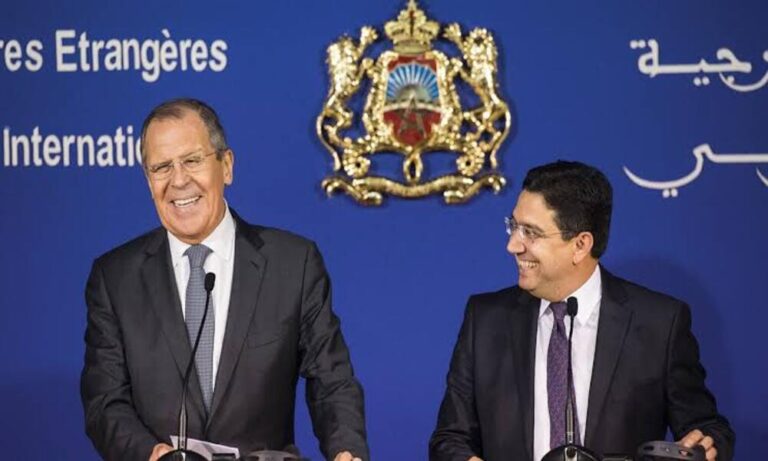
Russia has introduced a notable shift in its diplomatic stance on the Sahara issue. Russian Foreign Minister Sergei Lavrov declared on Monday that Moscow was ready to “welcome” the autonomy plan proposed by Morocco, referring to it for the first time as “one of the forms of self-determination recognized by the United Nations.”
This unprecedented formulation marks a significant change from the Kremlin’s traditionally cautious neutrality.
Speaking at a press conference with Arab media in Moscow, Lavrov affirmed that the Moroccan initiative “could constitute a fruitful solution” provided it complies with international law and secures the approval of all involved parties. He emphasized that Moscow grounds its position in “Security Council resolutions and the principle of political dialogue.”
Crucially, the Foreign Minister acknowledged that “the reality on the ground has changed” since the initial discussions surrounding a self-determination referendum in the 1980s. He now refers to the Moroccan autonomy plan as a “realistic option to definitively close the issue.” This statement comes just days before the UN Security Council meeting on the Sahara, which Russia is chairing this month.
For several years, Moscow had maintained a cautiously neutral stance, often choosing abstention during votes related to the United Nations Mission for the Referendum in Western Sahara (MINURSO). The tone adopted by Lavrov now reflects a methodical move toward implicit support for Morocco, aligning with the strategic partnership signed between King Mohammed VI and President Vladimir Putin in 2016.
This overture follows signs of diplomatic convergence between the two nations; Morocco recently abstained on a Human Rights Council resolution extending the mandate of the Special Rapporteur on Russia. As the renewal of MINURSO’s mandate approaches, Rabat is now hoping to secure at least a Russian abstention, which would signal benevolent neutrality.
According to analysts, this development is part of a broader global trend. There is a growing international consensus favoring Morocco’s autonomy plan as the only credible basis for a lasting settlement. The United States, France, and the United Kingdom already endorse this approach, while China confirmed its preference for a “realistic and pragmatic solution based on compromise” by voting in favor of Resolution 2602 in 2021.
MK/Sf/fss/abj/APA