





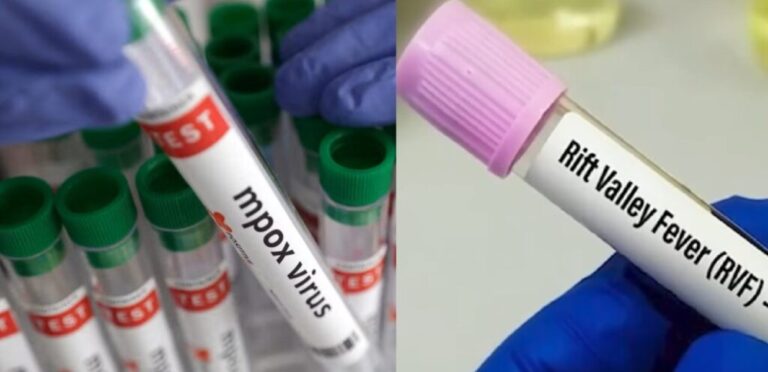
Senegal is struggling with dual outbreaks of Rift Valley Fever (RVF) and Mpox, but health authorities face a significant challenge: a large portion of the population remains poorly informed about transmission modes and necessary preventive measures.
A quick survey in Dakar revealed that many residents are unaware of how these diseases spread or the precautions they should be taking, despite confirmed cases of Mpox in the capital.
Matar Dramé, a lemon vendor in Dakar, admitted: “I don’t know much about Mpox or Rift Valley Fever. I hear about it, but I don’t really know what it is…” Similarly, Ibrahima Ba, a motorcycle taxi driver, highlighted the vulnerability of his job: “We transport all kinds of people without knowing if they are sick. You have to wear a mask and remain vigilant.”
Thiane Faye, an international business student, criticized the public health communication: “Many people are unaware that these diseases have arrived in Dakar. It is urgent that the authorities step up their communication efforts.”
Official figures confirm the scope of the outbreaks across the country: Since the start of the epidemic, 277 cases and 22 deaths have been recorded. The epicenter remains the Saint-Louis region (240 cases), though cases have also spread to Matam, Louga, Fatick, Dakar (2 cases), and Kaolack. Mpox: Since August 22, 2025, Dakar has reported 7 confirmed cases and 2 probable cases.
Minister of Health, Ibrahima Sy, sought to reassure the public on October 20, noting that the number of RVF cases is significantly decreasing in the most affected areas and that the case fatality rate is improving. However, he stressed that vigilance is crucial.
The Ministry clarified key preventive steps: RVF is primarily transmitted by the Culex mosquito or through contact with infected animals. The public is advised to thoroughly cook meat and pasteurize milk, and those handling raw products should be extra vigilant. Mpox is transmitted from animals to humans, and from human to human through close contact, respiratory secretions, contaminated objects, or sexual contact. Regular handwashing and avoiding close contact are recommended.
The Ministry urged the public to actively collaborate with health workers to limit the spread of both epidemics and protect the most vulnerable groups.
DM/te/ac/fss/abj/APA