



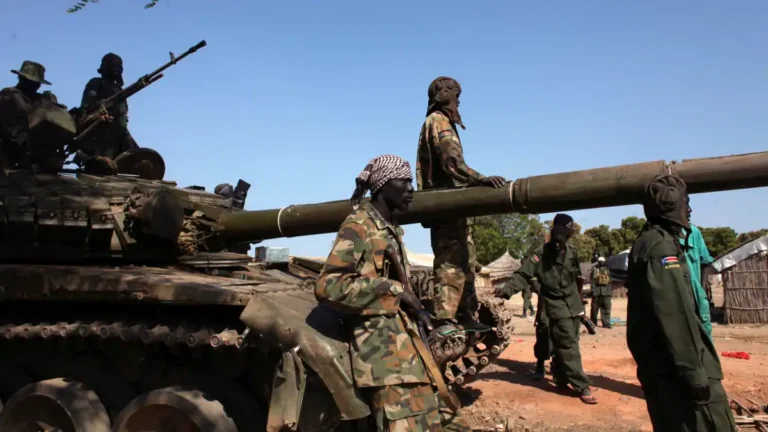
Recent armed confrontations in South Sudan including an attack on an aircraft, which resulted in fatalities is considered a war crime, says the UN Commission on Human Rights in a statement on Monday.
The surge in violence in Upper Nile State, escalating political tensions in Juba, and other political intrigues are threatening to derail South Sudan’s Revitalized Peace Agreement and inflict more pain and suffering on citizens, warns the UN body.
”They are the consequence of political mismanagement, including prolonged delays in the unification of armed forces, required under the Revitalized Agreement. The targeting and dismissal of opposition figureheads, including ministers and governors, combined with military confrontations, and mobilisation of militia, are adding to the destabilisation and the ensuing violence” says the statement.
“South Sudan should be moving forward, implementing the provisions of the peace agreement, strengthening institutions, and building a foundation for democracy,” says Yasmin Sooka, Chair of the Commission.
“Instead, we are witnessing an alarming regression that could erase years of hard-won progress. Rather than fuelling division and conflict, leaders must urgently refocus on the peace process, uphold the human rights of South Sudanese citizens, and ensure a smooth transition to democracy”, she adds.
Last Friday, President Salva Kiir appealed for calm and reiterated his commitment to peace, shortly after 27 people were killed in a violent attack on government forces
Gen Majur Dak was confirmed among those killed while several UNMISS peacekeepers were also injured in the attack blamed on the White Army militia.
Several opposition allies of first vice-president Mr Machar were arrested last week over an attack on a military base in Upper Nile State by the militia which fought alongside Machar during the country’s civil war.
Perennial political foes Kiir and Machar are part of a shaky unity government installed in 2018 after a peace deal following five years of civil strife which began when the latter was accused of orchestrating an abortive coup in December 2013.
“What we are witnessing now is a return to the reckless power struggles that have devastated the country in the past,” says UN Commissioner Barkey Afako.
“South Sudanese have suffered enough. They have endured atrocities, rights violations which amount to serious crimes, economic mismanagement, and ever worsening security. They deserve respite and peace, not another cycle of war”, he stresses.
The Commission reminds all parties to the peace deal as well as other South Sudanese stakeholders, of their obligations and responsibilities to respect human rights and to invest in completing the transitional processes.
These include constitutional reforms, the establishment of a truth commission, a Reparation Authority, and a hybrid court, which the UN sees as critical mechanisms intended to address the root causes of conflict and break the recurring cycles of political crises and human rights violations.
“It is time for leaders to act responsibly. South Sudan must continue to move forward with the transition—towards stability, democracy, and lasting peace—otherwise the country will backslide into chaos. The tension in Upper Nile must be resolved through dialogue, not through armed confrontation that will destabilize the entire nation and the region. The current trajectory of instability, repression, and renewed conflict must not be allowed to continue”, said Commissioner Carlos Castresana Fernández.
WN/as/APA