





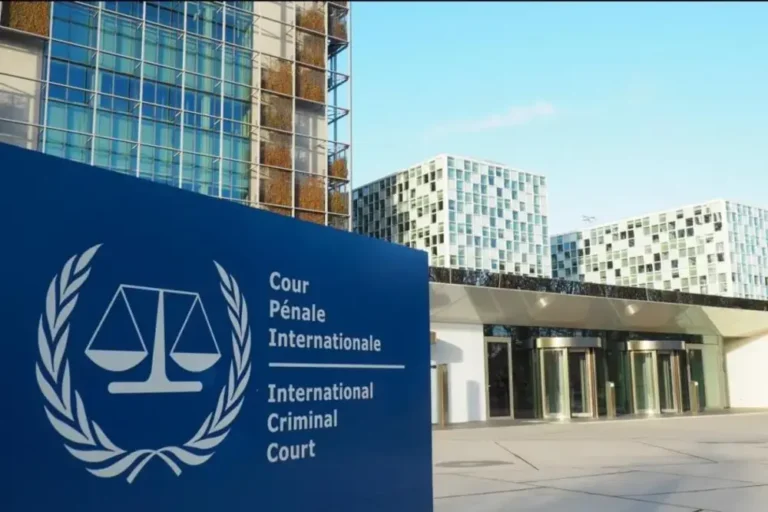
The International Criminal Court (ICC) has set the amount of reparations owed to victims of the crimes attributed to Al Hassan in Timbuktu at €7.25 million; the order, dated April 28, was registered in its official French version on June 11.
Trial Chamber X of the International Court of Justice (ICC) estimates that 65,202 direct and indirect victims are potentially eligible for reparations for the crimes attributed to Al Hassan in Timbuktu.
The amount awarded is equivalent to approximately 4.755 billion CFA francs, according to the conversion rate used by the Court.
The reparations provided are primarily collective and community-based, with a limited individual component for certain victims who have suffered specific physical or psychological harm. They will include rehabilitation, symbolic measures, and measures of satisfaction.
Al Hassan Ag Abdoul Aziz Ag Mohamed Ag Mahmoud was found guilty on June 26, 2024, of three crimes against humanity and five war crimes committed in Timbuktu, northern Mali, between April 2012 and January 2013.
He was sentenced on November 20, 2024, to ten years’ imprisonment.
The crimes include torture, cruel treatment, outrages upon human dignity, mutilation, convictions without due process of law, and persecution on religious grounds. The court linked these crimes to Al Hassan’s role within the Islamic police force established during the control of Timbuktu by Ansar Dine and Al-Qaeda in the Islamic Maghreb.
The ruling specifies that reparations do not cover all the damages suffered during the occupation of Timbuktu. They are limited to the crimes for which Al Hassan was found guilty. This clarification
excludes events not included in the judgment, even if they may have affected other residents.
However, the implementation of reparations remains uncertain from a financial standpoint. The court considers Al Hassan to be indigent.
The Trust Fund for Victims will therefore have to develop an implementation plan and mobilise additional resources to ensure the effective execution of reparations.
This case follows that of Ahmad Al Faqi Al Mahdi, the first Malian tried by the ICC. He was sentenced in 2016 to nine years in prison for the destruction of ten religious and historical buildings in Timbuktu, including nine mausoleums and the gate of the Sidi Yahia Mosque.
In the Al Mahdi case, reparations were set at €2.7 million, or approximately 1.771 billion CFA francs. They primarily concerned the destruction of cultural heritage, economic losses, and the moral harm
suffered by the Timbuktu community.
The chamber had initially considered a population of approximately 70,000 residents for the
period in question, while subsequent implementation identified 1,691 eligible individual beneficiaries.
The Al Hassan case, for its part, concerns direct harm to individuals as well as the consequences of the social order imposed on the inhabitants during the occupation of the city.
For Timbuktu, the two decisions thus cover two distinct aspects: one concerns the destruction of cultural heritage, the other the harm suffered by the population.
MD/te/Sf/fss/as/APA