





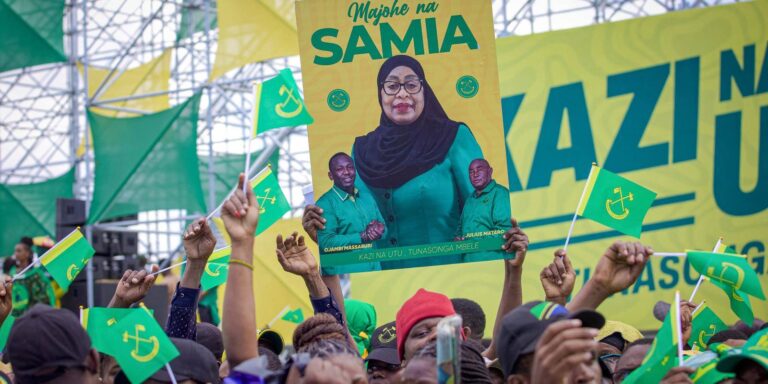
Tanzania’s female President Samia Suluhu Hassan is seen as the frontrunner as the country goes to the polls on Thursday with the main opposition parties excluded from the race.
Critics say the election does not have the feel of a multiparty democracy but that of a coronation for President Hassan who faces 16 lower rung contenders after her main rivals were barred from running.
”The other candidates are so anonymous that it’s as if Samia is the only candidate” said a critic who does not wish to be named.
Polls opened as early as 6am on Thursday with over 37 million Tanzanians registered to take part in the election, the results of which will be released within three days of the exercise.
Tanzanians are also voting to choose members of parliament (400 seats), and who will lead the semiautonomous island of Zanzibar and its representatives.
The election is taking place amid widespread criticism by human rights groups of government handling of the opposition and dissenting voices.
The two main oppsition groups Chadema led by Tundu Lissu who is being tried for treason and Luhaga Mpina’s ACT-Wazalendo were disqualified. Lissu has been in detention since April for leading a movement calling for electoral reforms ahead of the polls.
Speaking to Citizen TV in Kenya, Chadema foreign affairs secretary Deogratius Munishi dismissed the election as a charade.
“There is no election in Tanzania. If I may sum up properly, it is a coronation,” Munishi said a day before the polls.
After she was cleared to run by the electoral commission on August 27, 2025, President Hassan led a colourful campaign for her election under the ruling Chama Cha Mapinduzi party which was founded in 1977 and had ruled Tanzania ever since.
The 65-year-old incumbent succeeded the late John Magufuli following his death in 2021.
Ahead of the polls her government has been criticised by critics at home ad abroad for applying ”strong-arm politics” against her opponents with some of them jailed.
Tanzanians on social media claim the internet has been disrupted during the election, some of them accusing the government of online restrictions to clamp down on dissent.
Human Rights Watch said the government had placed restrictions on opposition activity, while critics faced harassment and state-controlled media gave wider coverage to ruling CCM campaign and largely excluded those on the other side of the political divide.
WN/as/APA