





Weeks ahead of Guinea’s constitutional referendum, authorities have released the final statistics of the biometric voter registry and the definitive list of polling centers and stations, while announcing the suspension of three major political parties to ensure a transparent and secure vote.
As the country prepares for the September 21 referendum, Guinean authorities have entered the final phase of electoral preparation, presenting the final voter register of 6,768,458 citizens and clarifying the organisation of polling centers and stations.
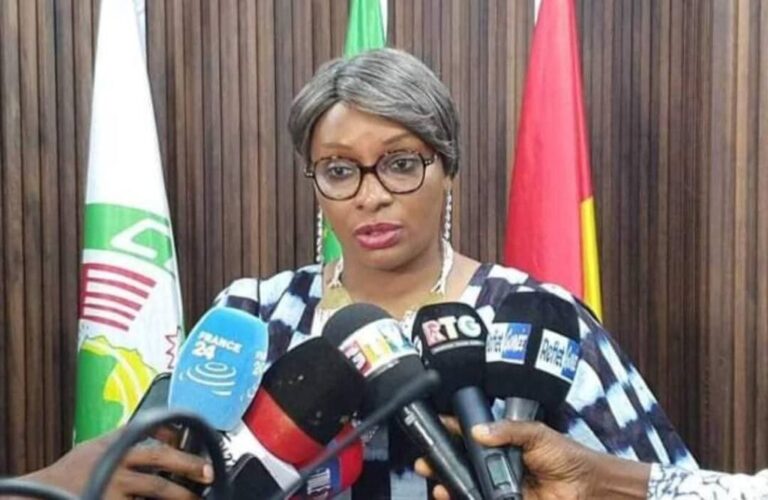
Djenabou Touré, Director General of Elections, stated that control, verification, data collection, and dispute management operations across 10 electoral constituencies lasted 15 days prior to the final consolidation. According to her, these figures accurately reflect the country’s electoral reality.
Ibrahima Kalil Condé, Minister of Territorial Administration and Decentralisation, specified that the final register includes 3,149,254 men, 3,493,252 women, and 125,271 diaspora voters. Guinea now has 16,702 polling centers and 23,662 polling stations, information deemed crucial for organising a transparent and secure referendum.
At the same time, authorities have temporarily suspended three major political parties: the Union of Democratic Forces of Guinea (UFDG), led by Cellou Dalein Diallo; the Rally of the Guinean People (RPG–Arc-en-Ciel), the former ruling party of Alpha Condé; and the Party for Progress and Renewal (PRP). The Ministry of Territorial Administration and Decentralization cited shortcomings identified during a party evaluation, including the absence of internal congresses and required financial documentation.
The government has also received a significant shipment of electoral kits, including computers, iris scanners, and GPS devices for geolocation, intended for updating the voter register. Prime Minister Bah Oury emphasised that this modernisation will save time and streamline resources for upcoming elections.
The scheduling of the referendum, more than three years after the ousting of President Alpha Condé, marks a major step in the country’s return to constitutional order, although the accelerated timeline has drawn criticism from opposition parties.
AC/sf/lb/as/APA