





Africa is fast emerging as a key arena for economic and diplomatic influence between the Gulf’s leading powers. Saudi Arabia and the United Arab Emirates have both intensified their presence on the continent, driven by long-term diversification agendas and the need to move decisively beyond hydrocarbons. While their strategic objectives broadly converge, the scale, geography and depth of their engagement reveal two markedly different trajectories.
For both Riyadh and Abu Dhabi, Africa is no longer a peripheral growth opportunity but a structural dependency for the success of their domestic transformation programmes. The continent’s demographic momentum, expanding consumer markets and resource base make it indispensable to Gulf strategies aimed at generating new sources of revenue, securing long-term demand and embedding Gulf firms into global value chains.
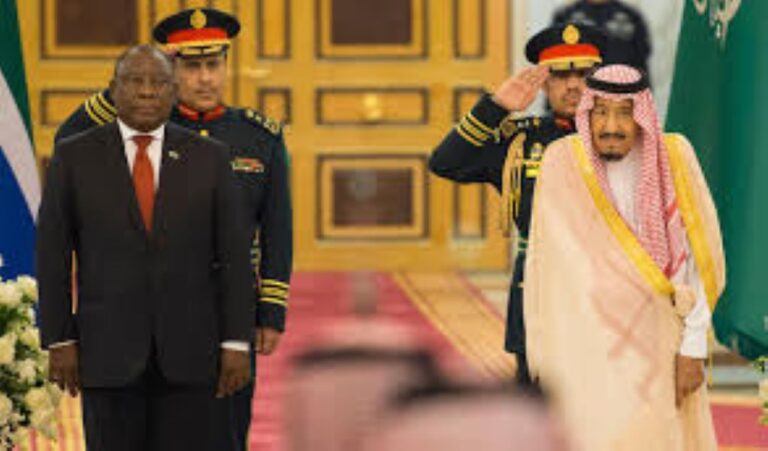
Saudi Arabia articulated this approach clearly in 2024 during the Future Investment Initiative, where it pledged to invest USD 41 billion in sub-Saharan Africa over the next decade. Of this amount, USD 25 billion is expected to come from private investors, with a further USD 10 billion mobilised through the Saudi EXIM Bank. This framework has since translated into a series of targeted transactions led by Saudi conglomerates and investment vehicles.
Saudi Arabia: focused capital, selective geography
Saudi engagement in Africa remains concentrated on a limited number of sectors and markets. Energy, industry and infrastructure form the backbone of Riyadh’s African strategy, with a clear preference for the continent’s largest and most established economies, notably Egypt, Morocco and South Africa.
In the energy sector, ACWA Power, backed by the Public Investment Fund, has emerged as the kingdom’s most active corporate actor on the continent. By the end of 2024, the company had invested around USD 7 billion across Africa, including flagship projects such as the Noor Ouarzazate solar complex in Morocco. ACWA Power has also signed a USD 5 billion cooperation framework agreement with the African Development Bank to finance power generation and water desalination projects.
Industrial and infrastructure investments follow a similarly targeted logic. In January, the Zahid Group acquired South African industrial conglomerate Barloworld for USD 1.3 billion, positioning itself to benefit from construction, mining and logistics demand across Southern Africa. More recently, Vision Invest announced a USD 700 million investment in Arise Integrated Industrial Platforms, marking its first direct entry into Africa. The presence of former Senegalese minister Amadou Hott on Arise’s board reflects an effort to anchor Saudi capital within African policy and institutional ecosystems, signalling a more strategic approach to stakeholder engagement.
Taken together, these initiatives underline a strategy that is capital-intensive and sector-focused, but geographically selective and still relatively concentrated.
The United Arab Emirates: scale, diversification and risk tolerance
The Emirati footprint in Africa is broader in both scale and scope. Between 2019 and 2023, the UAE invested an estimated USD 110 billion across the continent, making it Africa’s largest foreign investor over that period. Around USD 72 billion of this total has been directed towards renewable energy, led by companies such as Masdar, AMEA Power and Phanes.
Unlike Saudi Arabia, Emirati firms have demonstrated a more mature approach, and a higher tolerance for political and security risk. Alongside projects in established investment destinations such as Egypt, Ethiopia, Morocco and South Africa, UAE-based companies have ventured into more fragile environments. Global South Utilities (GSU) is developing a 50 MW solar plant in the Central African Republic, while Mark Cables has launched a thermal power project in Burkina Faso, despite persistent security challenges in both countries.
Transport and logistics constitute a central pillar of this strategy. By investing across ports, railways and corridors, the UAE has progressively built a continent-wide operational map of African value chains, allowing it to understand, structure and monetise trade flows at scale. DP World and AD Ports Group together operate or manage dozens of ports and logistics assets across Africa, giving Emirati actors an unrivalled vantage point over intra-African trade. This logistical depth reinforces the UAE’s positioning as a systemic partner as the African Continental Free Trade Area gathers pace.
Development partnerships, technology and diplomatic leverage
Beyond infrastructure and energy, the UAE has embedded its African engagement within a broader diplomatic and development framework. Abu Dhabi has become a regular host for high-level African delegations and investment conferences, reinforcing its role as a central diplomatic hub, while demonstrating its ability to turn MoU into tangible off-the-ground projects in complex environments. This was illustrated by the fundraising conference held in Abu Dhabi for Chad’s USD 30 billion national development strategy, Tchad Connexion 2030, where the UAE announced USD 6.2 billion in commitments.
The Emirati approach also increasingly incorporates future-oriented sectors. Since 2024, the UAE has pledged USD 3 billion to support the deployment of artificial intelligence infrastructure and applications across Africa, adding a technological dimension to its economic footprint. Combined with the continent-wide presence of Emirates and Etihad, and the UAE’s established appeal as a tourism and business destination, this strategy has fostered a level of familiarity and institutional density that Saudi Arabia has yet to replicate.
In a global context marked by geopolitical fragmentation and a search by African governments for diversified partnerships, the growing involvement of both Saudi Arabia and the UAE expands the range of external options available to the continent. At this stage, however, the breadth, consistency and political embedding of the Emirati model give Abu Dhabi a clear strategic advantage in Africa’s evolving partnership landscape.
WN/as/APA