



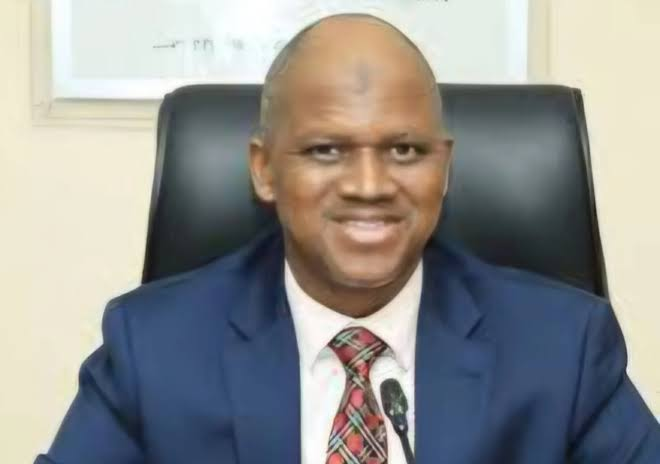
The Director-General, Infrastructure Concession Regulatory Commission (ICRC), Dr. Jobson Ewalefoh, says that some African countries have expressed interest in replicating Nigeria’s Renewed Hope Housing Public-Private Partnership (PPP) model to improve affordable housing delivery across the continent.
Presenting the model at the Second Forum for Public-Private Partnership Units in Africa in Addis Ababa, Ethiopia, Dr. Ewalefoh said that Nigeria was among five countries that presented projects at the clinics, alongside Malawi, Kenya, Djibouti and Côte d’Ivoire.
Speaking on Nigeria’s model, Ewalefoh said that the Renewed Hope Cities programme was designed to deliver 100,000 housing units across selected cities through a joint venture concession arrangement with the private sector.
“The beauty of this PPP structure is that it is not the conventional PPP. In this case, the private party owns the land, has the design, is financing it and is doing the construction,” he said.
He said the Nigerian Government, under President Bola Tinubu’s Renewed Hope Agenda, focused on reducing project risks to attract private investment rather than directly financing construction.
“The PPP here is that government agreed to de-risk the project,” Ewalefoh said.
Ewalefoh explained that commercial lending rates in Nigeria, which stood at more than 23 per cent, made housing finance at prevailing market rates difficult for many developers and prospective homeowners.
To address the challenge, he said, the government introduced measures to reduce financing risks and improve affordability.
These included identifying middle-income federal civil servants as prospective off-takers, committing to the construction of access roads to the semi-urban project sites and facilitating about 19 million dollars in single-digit-interest funding through the Federal Mortgage Bank of Nigeria.
He added that another 20 million dollars in concessionary loans was made available through the Family Homes Fund.
According to the statement issued by Ifeanyi Nwoko, Acting Head of Media and Publicity, ICRC, in Abuja on Monday Ewalefoh explained that the prospective homeowners will also benefit from reduced mortgage rates through an approximately 112 million-dollar MOFI Real Estate Investment Fund (MRIF).
Ewalefoh said that the government negotiated sale prices with the developer to keep the houses affordable and limited purchases to one unit per buyer to discourage speculation.
He said the measures had reduced the effective cost of the project by about 30 per cent.
The ICRC director-general said that the arrangement demonstrated how the government could facilitate housing delivery without directly financing construction.
He said that about 39 million dollars in concessionary funding was helping to unlock a project with a construction cost of approximately 125 million dollars in private-sector investment.
“The government does not need to finance housing capital projects. It can crowd in private capital through policy, land availability and off-taker facilitation to create a replicable, scalable model for housing delivery,” the statement said.
The statement said the Nigerian model attracted considerable interest during the question-and-answer session, with delegates seeking clarification on how its risk-reduction mechanisms could be adapted to their respective countries.
It said that several participants focused on the use of off-taker arrangements and concessionary financing to attract private investment while keeping housing costs within reach of target beneficiaries.
The discussions also enabled Nigeria to learn from other participating countries’ experiences in structuring PPP projects, allocating risks and managing implementation.
It said that the delegations from all 36 countries shared experiences, including successes and setbacks, to identify practical approaches to delivering social infrastructure through public-private partnerships.
The statement said the two-day forum, co-organised by the UNECA, the African Development Bank (AfDB) and the African Legal Support Facility (ALSF), under the theme: “Making Social Sector PPPs Work: From Policy Ambition to Effective Service Delivery”, attracted delegations from 36 countries.
“This year’s forum brought together heads of PPP units, development finance institutions, private operators and transaction advisers to explore how PPPs could support affordable housing, healthcare, education, sanitation and water supply.
“Participants examined ways to ensure that social infrastructure projects remained financially sustainable, affordable and accountable, particularly because they often generated insufficient revenue from user fees to repay private investors,” the statement added.
GIK/APA