



Driven by expanding digital access and vibrant local narratives, Africa’s combined pay television and online streaming market is projected to reach $5.2 billion by 2030.
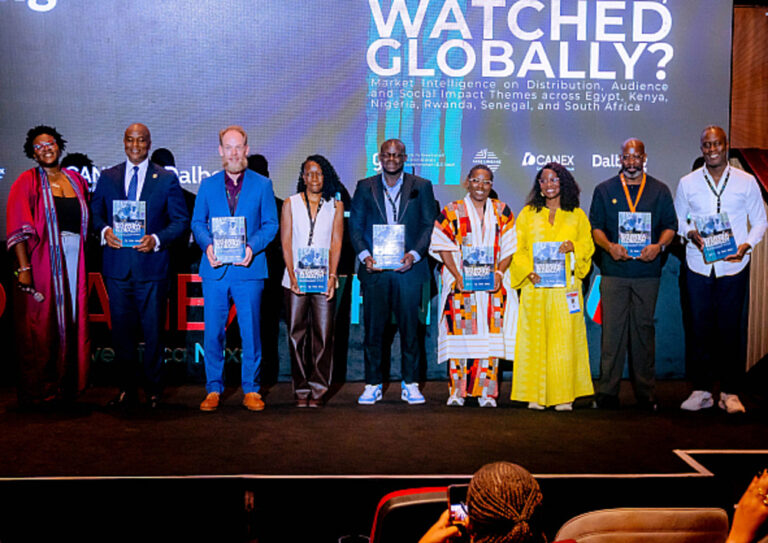
Yet, a comprehensive new study reveals that financial growth alone will not ensure African films successfully reach viewers or yield sustainable commercial returns for creators. Entitled Made in Africa, Watched Globally, the research was commissioned by the Deutsche Gesellschaft für Internationale Zusammenarbeit (GIZ) and the African Export-Import Bank (Afreximbank) through its Creative Africa Nexus (CANEX) programme, and produced by Dalberg. Covering Egypt, Kenya, Nigeria, Rwanda, Senegal, and South Africa, the report draws on extensive stakeholder interviews, case studies, and a survey of 1,630 viewers to examine the complex interplay between production, distribution, and audience monetization.
The findings highlight a dual challenge for filmmakers: producing compelling content while meeting high technical expectations. Regional preferences vary sharply, underscored by data showing that 56% of respondents in Rwanda cited a lack of interest in available themes as a barrier, while 98% of viewers in South Africa rated acting quality as crucial, with 96% emphasizing plot and technical standard. Furthermore, accessibility remains a persistent hurdle. In Kenya, 52% of surveyed audiences reported difficulty finding local and African films on mainstream channels. While platforms like YouTube have emerged as major distribution routes—utilized by 87% of Kenyan and 98% of Senegalese streaming audiences—reliance on ad-supported models often fails to generate adequate revenue, a challenge compounded by upcoming adjustments to YouTube’s monetization thresholds for new channels in 2027.
Infrastructure deficits further constrain market potential. Africa averages roughly one cinema screen per 787,000 people compared to one per 8,700 in the United States, with existing venues heavily concentrated in major urban centers like Cairo, Alexandria, and Nairobi. Although mobile streaming offers an alternative, high data costs remain prohibitive, with 1GB often consuming over 3% of monthly income. To overcome these barriers, the study advocates for innovative distribution models, including mobile-money-integrated payments, offline downloads, micro-subscriptions—such as those pioneered by Kenya’s Viusasa—and advertising-supported platforms like Senegal’s Marodi TV. Additionally, the report calls for strengthened African-owned aggregators, regional licensing under the African Continental Free Trade Area (AfCFTA), and dedicated distribution funds to support marketing, subtitling, and localized releases. Beyond commercial viability, the research underscores cinema’s profound social impact, demonstrating how compelling storytelling can successfully shape public policy and drive civic engagement across the continent.
ABJ/APA