



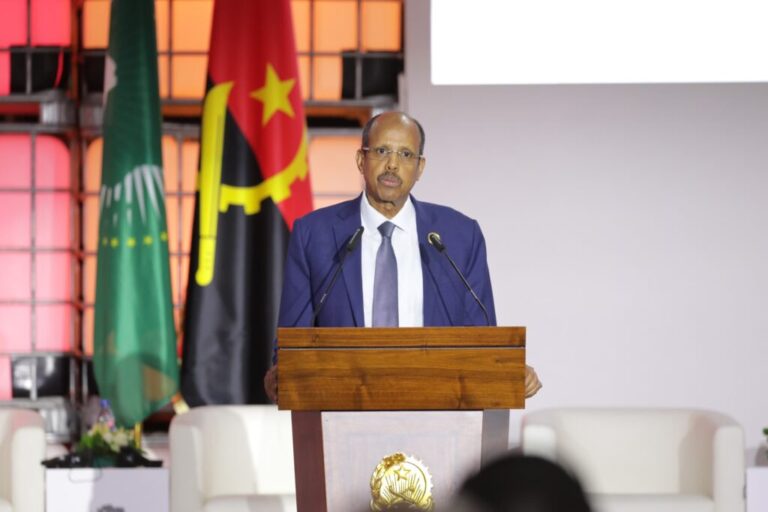
African heads of state and senior officials convened in Luanda for the 3rd Summit on Financing Infrastructure in Africa, calling for a radical increase in the mobilization of African resources to close the infrastructure investment gap, which is estimated to exceed $100 billion annually.
The summit, organized by AUDA-NEPAD and the African Union Commission (AUC) and hosted by the Angolan government, runs from October 28 to 31 under the theme: “Capital, Corridors, Trade: Investing in Infrastructure for the AfCFTA and Shared Prosperity.” Its core objective is to accelerate the implementation of the Programme for Infrastructure Development in Africa (PIDA).
Angolan President João Lourenço, current Chairperson of the African Union, opened the summit by stressing the need to mobilize all available financial resources—for roads, railways, ports, power lines, and digital networks—and called for better policy coordination to harmonize financing initiatives.
Togolese President Faure Essozimna Gnassingbe insisted that Africa must now rely on its own financial strength. He pointed out that the continent holds considerable funds in its insurance companies, pension funds, and sovereign wealth funds, but a large portion of this capital remains underinvested or is directed outside of Africa.
“We must reverse this trend,” Gnassingbe declared, advocating for the strengthening of national development banks, the revitalization of capital markets, and the establishment of regional financial mechanisms to channel this domestic capital toward structuring continental projects. He also emphasized the need to build “sustainable, resilient, and adapted to climate challenges” infrastructure to make the African Continental Free Trade Area (AfCFTA) an economic reality.
AUC Chairperson Mahmoud Ali Youssouf stressed that infrastructure financing is a “strategic, not a technical, issue,” and proposed creating a Continental Pact to secure the necessary funding. This pact, he explained, should align national priorities with continental corridors, mobilize the African private sector, and improve access to global climate finance.
With sovereign wealth and pension funds collectively holding over $70 billion available annually, the Luanda summit is positioned as a pivotal moment for demonstrating Africa’s commitment to autonomous, sustainable, and inclusive financing of its development. The overall goal remains closing an annual funding gap estimated at over $130 billion needed to implement critical projects by 2040.
AC/Sf/fss/abj/APA