





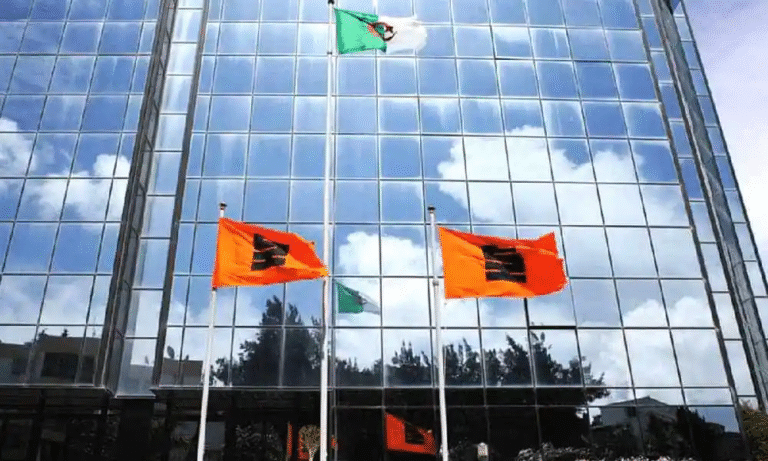
The Algerian government has unveiled a new $60 billion investment plan for its hydrocarbon and petrochemical sectors spanning 2025–2029.
While framed as a strategic industrial shift, the plan highlights the nation’s continued heavy reliance on oil and gas, which still account for nearly 90% of exports and over half of its budget revenue.
Minister of Energy and Mines, Mohamed Arkab, detailed the spending during the Africa & Mediterranean Energy & Hydrogen Exhibition and Conference (NAPEC 2025) in Oran. The strategy heavily favors extraction, with nearly 80% of the funds allocated to upstream activities—exploration and production. The remaining budget will target refining and petrochemical projects, including a new refinery in Hassi Messaoud and plants for methanol and clean fuels.
Minister Arkab justified the massive investment by stating the objective is to meet rising domestic demand while maintaining Algeria’s status as a reliable energy supplier, particularly to Southern Europe. He called natural gas a “transitional energy source and a pivot in the global energy equation,” a consistent official stance despite the country’s long-standing struggle to leverage its gas surpluses for sustainable economic development.
The new $60 billion commitment has prompted skepticism, as it follows a series of similar, partially theoretical announcements. In February 2022, President Abdelmadjid Tebboune pledged $39 billion in investments over four years. That figure was later revised to $40 billion for 2023.
Cumulative investment commitments now total over $100 billion, yet this has not led to a significant increase in production, which currently sits at around 100 billion cubic meters of gas per year.
In an international environment prioritizing energy transition, Algeria’s decision to focus overwhelmingly on upstream oil and gas is seen by many as a short-term move. Critics argue the strategy is geared toward preserving immediate external revenues rather than achieving genuine economic diversification.
Despite being identified as a priority for over a decade, the renewable energy sector remains marginal. Similarly, flagship projects for green hydrogen production are struggling to advance beyond the experimental stage, casting a shadow over Algeria’s long-term sustainability goals.
MK/ak/ac/fss/abj/APA