





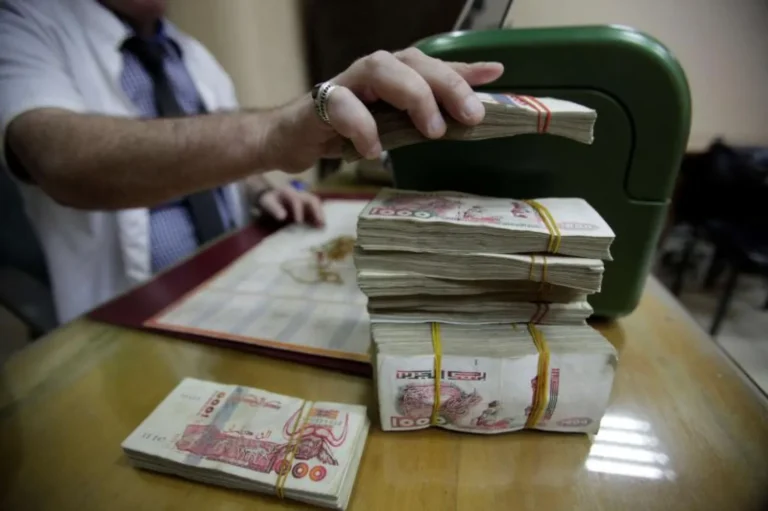
The Bank of Algeria is posting remarkable performance for the national currency against major currencies, but
this improvement raises questions about its sustainability in an economy still dependent on hydrocarbons.
The official narrative highlights a “historic recovery” of the dinar.
By 2024, according to figures from the Bank of Algeria, the national currency will have appreciated by 32 percent against the dollar, 24 percent against the euro, and nearly 93 percent against the yuan.
These spectacular performances are presented as proof of restored stability, contained inflation, and increased confidence in the banking system. The institution also highlights the rise of Islamic finance, increased liquidity, and the consolidation of solvency ratios, all elements that reinforce the idea of a “solid” banking sector.
For President Abdelmadjid Tebboune, who has made the value of the dinar a marker of his second term, these results are a sign of economic revival. The absence of external debt, regularly highlighted by the government, fuels this narrative of a sovereign Algeria, sheltered from international pressure.
The project is ambitious: to achieve a GDP of $400 billion by 2027, thanks to mining, the development of industrial infrastructure, and accelerated economic diversification.
But behind the displayed optimism, weaknesses remain. The improvement in the Algerian currency is largely due to the favorable conditions in oil and gas prices, which still represent more than 90 percent of export revenues. The improvement in the money market, invoked by the authorities, remains partly artificial, as the informal economy continues to weigh on financial flows and fuel a parallel currency market that is difficult to control.
Similarly, the increase in the number of bank accounts and branches, while notable, does not yet reflect a deep integration of banking services, in a country where a large portion of transactions are still carried out in cash.
The credibility of official statistics is also questionable. A nearly 100 percent appreciation of the dinar against the yuan or more than 50 percent against the yen in a single year seems difficult to reconcile with the structural realities of an economy that remains largely undiversified and marked by deficits in productive investment.
The successes highlighted by the Bank of Algeria also mask the persistent dependence on imports, the weakness of the non-hydrocarbon industrial base, and the exodus of capital.
While inflation has indeed fallen to less than 4 percent, it remains largely imported and sensitive to fluctuations in global energy and grain prices.
Algerians’ purchasing power remains fragile, weighed down by regular increases in consumer prices and high unemployment, particularly among young people.
Current financial policy therefore appears to be as much a matter of communication as of genuine structural transformation.
The recovery of the dinar, however lasting, will depend less on the Bank of Algeria’s spectacular announcements than on the country’s ability to undertake profound productive reforms, attract investment, and reduce its
dependence on hydrocarbons.
Without this, the current improvement risks being nothing more than a passing illusion.
MK/ac/fss/as/APA