





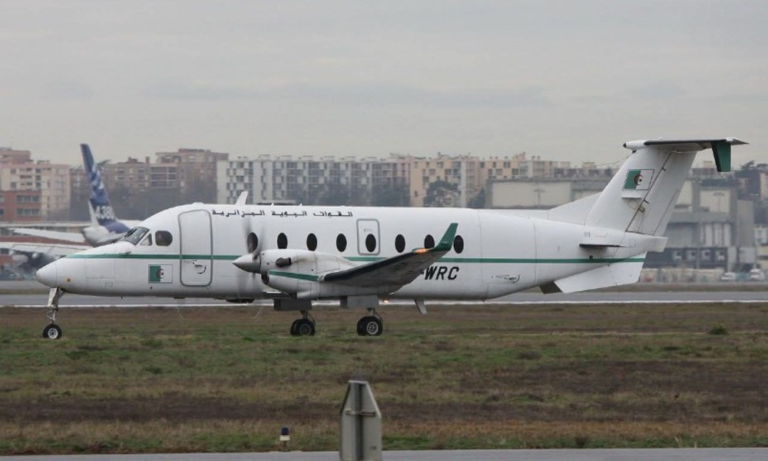
The Algerian military has confirmed that a Beechcraft BE-1900 transport aircraft crashed shortly after takeoff from the Boufarik airbase, located approximately 50 kilometers south of Algiers, on the afternoon of Thursday, March 5, 2026.
While two crew members were reported dead at the scene, the Ministry of National Defense confirmed on Saturday that two additional crew members succumbed to their injuries at the Ain Naadja Central Military Hospital, bringing the total death toll to four. The flight was carrying a total of six military personnel, and an investigation into the exact causes and circumstances of the accident is currently underway.
General Saïd Chanegriha, Chief of Staff of the People’s National Army, visited the survivors in the hospital following the incident and extended his condolences to the families of the deceased, whom the military has officially honored as martyrs. This accident has inevitably brought renewed focus to the safety and maintenance of Algeria’s military aviation fleet. Although the country maintains one of the largest defense budgets in Africa, its diverse inventory of Russian, Western, and Chinese aircraft poses significant logistical and technical challenges regarding upkeep and modernization.
This tragedy has drawn uncomfortable comparisons to past disasters, most notably the April 2018 crash of an Il-76 transport plane at the same Boufarik base, which resulted in the loss of 257 lives and remains one of the deadliest military air disasters in history. Observers and critics have long questioned the operational safety standards within the Algerian military, noting that despite substantial financial investment, the service has experienced numerous crashes over the past decade involving everything from transport planes to fighter jets and reconnaissance aircraft. As the investigation into the recent Beechcraft crash proceeds, the incident is expected to revive broader national debates regarding transparency, the reliability of the aging military fleet, and the overall management of operational safety protocols.
MK/AK/fss/abj/APA