



Cameroonian President Paul Biya has set February 7, 2027, as the date for legislative and municipal elections, ending months of uncertainty regarding the renewal of the National Assembly and municipal councils – bodies whose terms had been extended on several occasions.
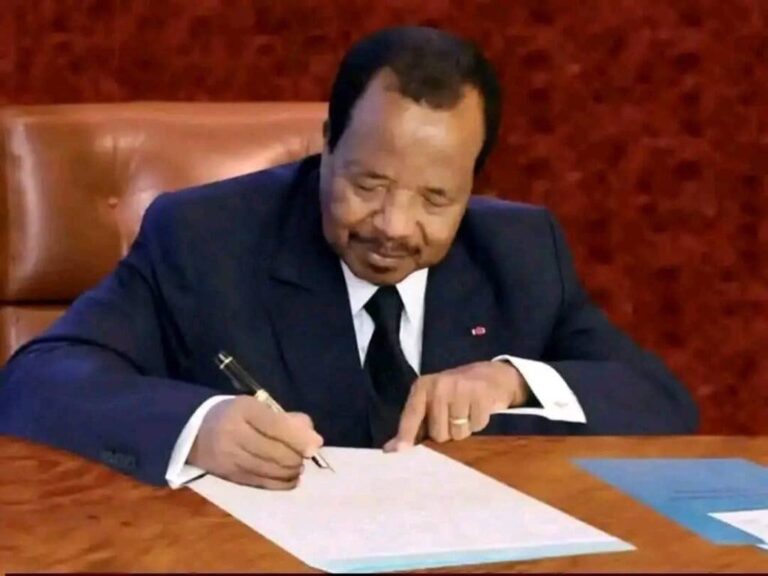
In Decree No. 2026/345, signed on Monday, November 9, 2026, the Cameroonian head of state called upon the electorate to vote on Sunday, February 7, 2027, to simultaneously elect members of the National Assembly and municipal councillors. According to the presidential decree, polling will take place between 8:00 a.m. and 6:00 p.m.
This decision marks a new phase in Cameroon’s political calendar, following the repeated postponement of these two elections, which were originally expected to take place in 2025 and subsequently in 2026.
The terms of the deputies elected in February 2020 had been extended until December 20, 2026, while the terms of municipal councillors had been extended until February 28, 2027.
Setting the election date complies with the 90-day legal requirement stipulated by Article 86 of the Electoral Code, which mandates a 90-day interval between the formal calling of the electorate and the actual holding of elections.
The presidential decree, signed on November 9, thus aligns with this timeframe, leading to the February 7, 2027, election date.
Previous postponements were justified by the authorities, who cited constraints related to the electoral calendar, financial resources, and logistical preparations.
Holding both elections on the same day also allows for the consolidation of electoral operations and helps limit the costs that would otherwise be incurred by conducting them separately.
With this new deadline, political parties now have a specific date by which to accelerate their preparations – including candidate nominations, the compilation of candidate lists, alliance
negotiations, and the mobilisation of their supporters.
The body responsible for organizing the elections, Elections Cameroon (ELECAM), will also need to intensify its administrative and logistical preparations.
This dual election carries particular significance for Cameroon’s institutional landscape. It follows the presidential election of October 12, 2025 – won by Paul Biya, who has been in power since 1982
– and is intended to renew both parliamentary representatives and elected officials in local government bodies.
In the last legislative elections, held in February 2020, the ruling party – the Cameroon People’s Democratic Movement (CPDM) – secured 152 of the 180 seats in the National Assembly.
The upcoming vote will provide a gauge of the new balance of political forces within the parliamentary institution and municipal councils.
Cameroonian voters are therefore set to head to the polls on February 7, 2027, to elect their national and local representatives, against a backdrop defined by the need for institutional renewal and preparations for the country’s next political phase.
TE/Sf/fss/as/APA