





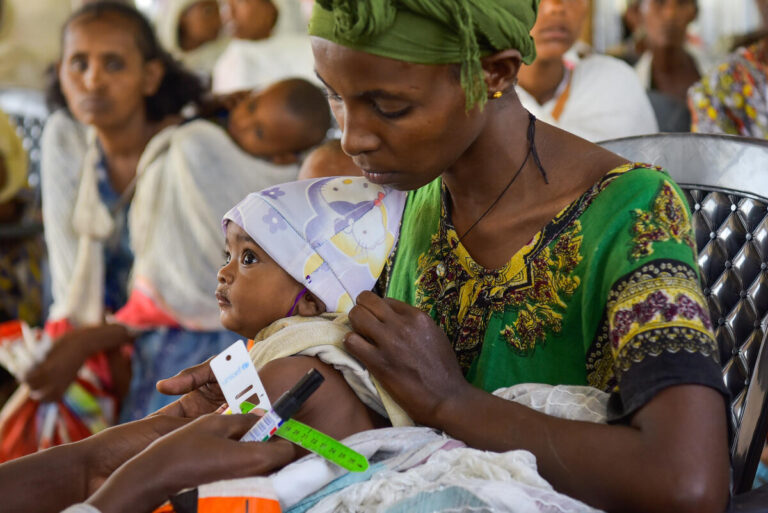
The 2025 Global Hunger Index (GHI) was launched on Tuesday in Addis Ababa, the capital of Ethiopia with an urgent call for accelerating action and delivering concrete results to end hunger on the continent in the coming decade.
The 2025 GHI revealed that chances for achieving zero hunger by 2030 worldwide are slipping away while undernourishment, child stunting, and child mortality levels are far from international targets, undermining the human right to food and the well-being of millions worldwide.
According to the 2025 GHI, various challenges including, climate change, armed conflicts, economic fragility and political disengagement exacerbate the situation of hunger in Africa and beyond.
The 2025 GHI scores show that hunger is considered alarming in 7 countries namely in Burundi, Democratic Republic of the Congo, Haiti, Madagascar, Somalia, South Sudan and Yemen.
The index indicated that conflict remains the most destructive force driving hunger in different parts of the world with armed violence fueled 20 food crises affecting nearly 140 million people last year.
The index noted that humanitarian assistance has dropped sharply, while military spending has surged, undermining the global hunger response.
The index further revealed that if progress remains at the pace observed since 2016, low hunger at the global level may not be reached until 2137-more than a century away.
Speaking at the launching event, Moses Vilakati, AU commissioner for agriculture, rural development, blue economy and sustainable environment, said African countries lagged behind in implementing the Comprehensive Africa Agriculture Development Programme (CAADP) that required them to eradicate hunger, halve poverty and triple intra-African agricultural trade and build resilience until 2025.
“According to the 2025 FAO report, nearly 300 million people on the continent are food insecure. This aligns with CAADP biennial review, which shows that no member state was on track to achieve zero hunger by 2025. Alarmingly, the continent spends up to 100 billion U.S dollars each year on food imports,” he said.
Highlighting that hunger is a complex problem but entirely solvable one, Vilakati has called on African governments to recommit to zero hunger through policy reforms, smarter investments, and enhanced accountability mechanisms.
“We must strengthen agrifood systems, invest in climate resilience, improve our soil productivity, expand social protection and safety nets, empower women and youth across value chains, and promote innovation that improves productivity and market access, while mitigating food loss and wastage,” the commissioner added.
MG/as/APA