



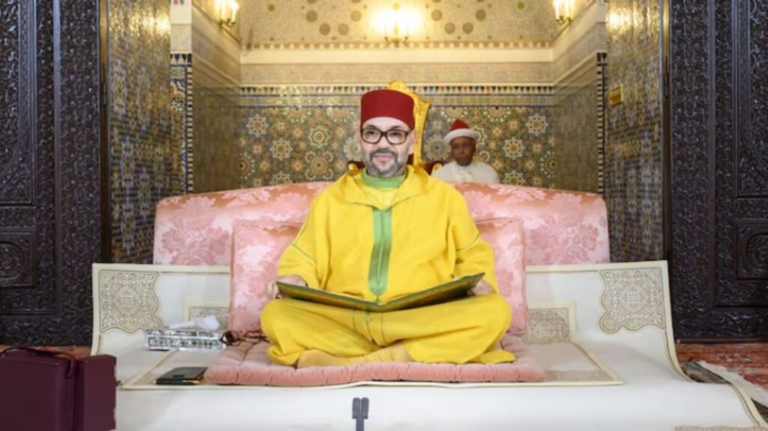
King Mohammed VI on the occasion of Eid-ul-Adha has granted a royal pardon to 1,376 individuals convicted by Moroccan courts.
The beneficiaries include 20 inmates in cases related to extremism and terrorism who have, according to the Ministry of Justice, formally renounced radicalism.
In a statement, the Ministry of Justice said the royal pardon covers both incarcerated individuals and persons at liberty. According to the Moroccan authorities, 1,195 beneficiaries are currently serving prison sentences, while 161 others are serving their sentences outside correctional facilities.
Among those in detention, 1,180 inmates received sentence reductions, while 13 others benefited from a pardon covering the remainder of their prison terms. The statement also noted that one life sentence was commuted to a fixed-term sentence, while a death sentence was reduced to life imprisonment for another inmate.
Beneficiaries who are not in custody received various forms of leniency, ranging from the remission of prison terms or fines to combined pardons covering both financial penalties and custodial sentences. Authorities did not specify the offences involved for this category.
The statement also highlighted a specific component concerning individuals convicted in cases linked to “extremism and terrorism.” Twenty inmates were granted clemency after, according to the ministry, they “officially expressed their attachment to the constants and sacred values of the nation and national institutions,” while revising their ideological positions and rejecting extremism.
Of these, 12 received reductions in their remaining prison terms, six were granted full pardons, and two benefited from clemency covering both fines and remaining custodial sentences. Moroccan authorities regularly present such measures as part of a broader reintegration and counter-radicalisation policy within the country’s security framework.
Royal pardons are traditionally announced in Morocco during major religious and national celebrations. They typically concern prisoners selected on social, humanitarian, or behavioural grounds.
MK/AK/Sf/lb/as/APA