



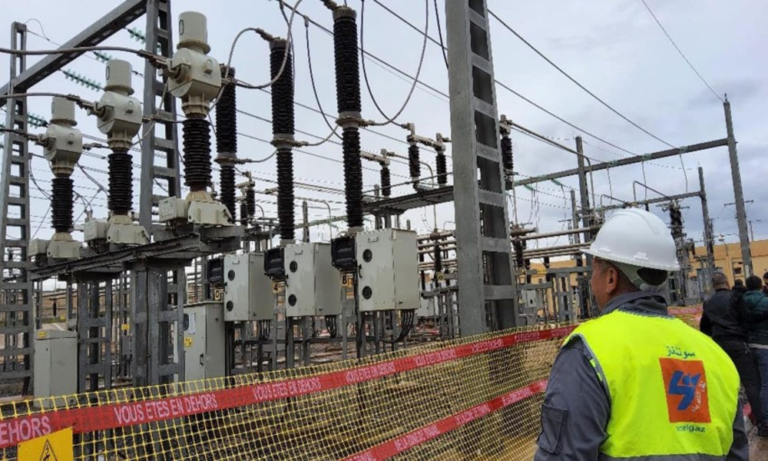
A rankings list by the Business Insider Africa, places Algeria 3rd in Africa for electricity production, highlighting the strength of its energy capacity.
Despite this several structural imbalances continue to hinder the transformation of this energy advantage into a truly diversified industrial powerhouse.
According to data cited by Business Insider Africa and sourced from the International Energy Agency (IEA), Algeria, ranked 3rd in Africa for electricity production, generated over 95,627 GWh, placing it behind South Africa and Egypt.
Algerian authorities and media present this result as proof of the strength of the national energy sector and the country’s emergence as a strategic player in the African electricity market.
The ranking, however, should be viewed with some caution. Algeria’s performance relies almost exclusively on natural gas, which accounts for approximately 99% of the country’s electricity production, according to the data cited in the report.
This heavy dependence leaves the Algerian energy system permanently vulnerable to fluctuations in gas revenues and slows down energy diversification, which is nevertheless regularly touted as a strategic priority by the authorities.
The contrast is all the more striking given that several African economies are now accelerating their investments in renewable energies and hybrid infrastructure.
Egypt is simultaneously developing solar, wind, and civilian nuclear power, while Morocco is continuing to expand its renewable energy capacity to reduce its dependence on imported hydrocarbons.
While Algeria certainly retains significant production capacity thanks to its abundant gas resources, this energy revenue continues to structure the entire national electricity model.
The comparisons highlighted with Morocco or Nigeria also reflect a primarily quantitative view of the sector. Producing more electricity does not automatically translate into a more efficient industrial base or greater economic competitiveness.
A significant portion of the Algerian economy remains heavily dependent on hydrocarbons, while
industrial processing capacity outside the energy sector remains limited compared to the financial potential accumulated over several decades.
The discourse surrounding “energy independence” also masks internal challenges linked to the continued rise in domestic consumption, the need to modernise infrastructure, and the burden of energy subsidies on public finances.
While increased production capacity currently allows for the absorption of national demand, the question of the model’s sustainability remains open in the medium term within a global context marked by the energy transition.
MK/AK/Sf/fss/as/APA