



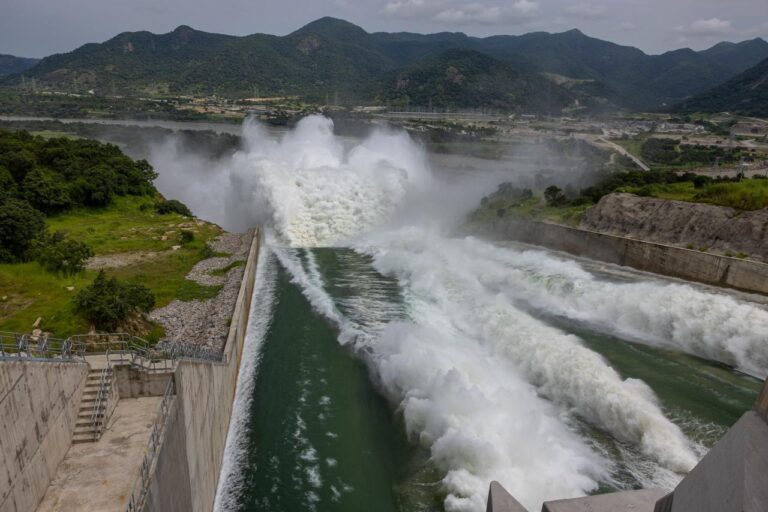
Ethiopia is rejecting Egypt’s unchanged posture against the recently inaugurated Grand Ethiopian Renaissance Dam (GERD) which Cairo maintains endangers the lives of millions of people in downstream Nile nations.
The $4.2 billion dam, the biggest in Africa with 74 billion cubic meter water holding and 5,150-megawatt generating capacity was inaugurated on September 9 in the presence of regional leaders from other Nilotic countries except Egypt and Sudan who remain opposed to the project.
Both countries say Gerd will adversely affect their water security provided by the world’s longest river.
Gerd enthusiasts say it would reorganise the power dynamics in the Nile Basin countries especially between Ethiopia, Egypt and Sudan.
Since construction began in 2011, Cairo and Khartoum have made frantic appeals to the international community and in some circumstances warning Ethiopia to stop or modify the project or face the prospect of open sabotage.
Egypt’s Foreign Minister Badr Abdelatty condemned Ethiopia’s “destabilizing unilateral policies” at the just concluded UN General Assembly in New York, where he announced that his country would take the case against Gerd to the international court.
Abdelatty criticised Ethiopia’s finalisation of the construction of Gerd unilaterally, and imposing a fait accompli on the downstream states by this act.
Ethiopia in response firmly rejected what it described as unfounded claims at the UN by Egypt regarding the social and environmental impacts of the dam which Cairo said would compromise the precious water security for millions of its people.
While exercising the Right of Reply to the Egyptian diplomat at the UN, Ethiopia’s Deputy Permanent Representative to the world body, Yoseph Kassaye dismissed Egypt’s plan to take the case to international law.
He said Cairo’s claims against Gerd which have been communicated to the UN Security Council are baseless and misleading.
“The stark contrast between Ethiopia’s long-standing policy of cooperation and Egypt’s continued hostility is clear,” Kassaye told the Assembly, stressing that Ethiopia’s position on the Nile is anchored in the international principle of equitable and reasonable utilisation of transnational resources which would also benefit its neighbours.
He criticised Egypt for attempting to impose so-called “historic rights” rooted in colonial-era treaties that excluded most Nile Basin countries.
“While Ethiopia seeks to develop the Nile to uphold the basic human rights of its people, access to clean water, food security, and electricity, Egypt insists on denying these necessities through outdated claims of monopoly over the river,” Kassaye said.
He also recalled that Ethiopia had engaged Egypt throughout Gerd’s planning and construction process, in contrast to Cairo’s unilateral construction of the Aswan High Dam, which he claimed, displaced communities and destroyed ancient civilizations.
Despite multiple rounds of talks, Ethiopia noted that Egypt has repeatedly sought unreasonable concessions without demonstrating genuine interest in a mutually beneficial agreement.
“Egypt’s entire focus has been to extract recognition of colonial-era entitlements and secure absolute control over the Nile Basin,” Kassaye stated.
Professing Ethiopia’s commitment to peace and regional integration, he accused Egypt of undermining these efforts by fueling instability in neighbouring countries through arms shipments and political interference.
Ethiopia further criticised Egypt for attempting to internationalise the GERD feud, calling it “an effort to exploit the UN platform for narrow political purposes and to deflect attention from its own internal and regional challenges.”
MG/as/APA