



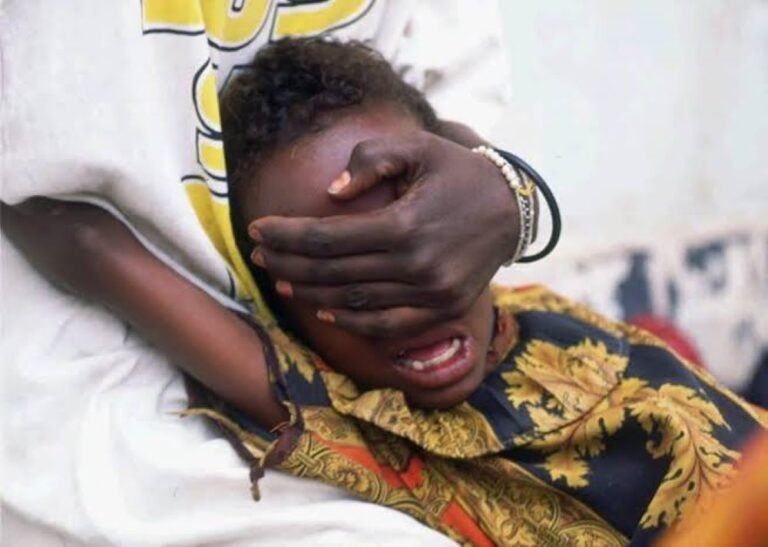
Female Genital Mutilation (FGM) has persisted in Uganda after the country outlawed the practice a decade ago, stakeholders in the Sebei sub-region said on Thursday, highlighting that cross-border communities remaining the biggest obstacle in efforts to eliminate the harmful practice.
The concerns were raised as cultural leaders, government officials and civil society organisations gathered in Bukwo Town Council to discuss the proposed East African Elimination of Female Genital Mutilation Bill, 2025, which seeks to strengthen regional cooperation in ending the harmful practice.
The dissemination meeting was organised by the Sabiny Transformation Initiative with support from the Strategic Initiative for Women in the Horn of Africa (SIHA) and funding from the African Women’s Development Fund.
According to the experts at the discussion, East African countries were compelled to pursue a regional approach after recognising that FGM had become a cross-border challenge, particularly among communities living along the Uganda-Kenya border.
Festo Majinjaj, a Programme Officer at the Sabiny Transformation Initiative, said Uganda’s Prohibition of Female Genital Mutilation Act, 2010 significantly reduced the practice but also drove it underground.
“From the time government enacted the 2010 Prohibition of FGM Act, FGM became a clandestine practice. Statistics are not there, but the practice is still there,” Majinjaj said.
He noted that although official records are scarce, communities continue to quietly report cases of girls and women undergoing FGM.
According to Majinjaj, the most affected areas are remote border communities where access to education, healthcare, security and economic opportunities remains limited.
He identified Bukwo District as one of the major hotspots because of its proximity to Kenya’s West Pokot County, where residents easily cross through numerous unmanned routes along the slopes of Mount Elgon.
“The borders are porous. People just walk across without anybody manning them. FGM is still being practiced in these areas,” he said.
Majinjaj added that some families continue subjecting girls to FGM because of cultural beliefs associated with marriage and bride price.
He also revealed reports indicating that some women are subjected to genital cutting during childbirth by traditional birth attendants, making the practice even harder to detect.
Bukwo District Community Development Officer Ben Sakaja said the district has made significant progress since the 1990s, when FGM was widely accepted as a cultural practice.
According to Majinjaj, the most affected areas are remote border communities where access to education, healthcare, security and economic opportunities remains limited.
He identified Bukwo District as one of the major hotspots because of its proximity to Kenya’s West Pokot County, where residents easily cross through numerous unmanned routes along the slopes of Mount Elgon.
“The borders are porous. People just walk across without anybody manning them. FGM is still being practised in these areas,” he said.
Majinjaj added that some families continue subjecting girls to FGM because of cultural beliefs associated with marriage and bride price.
He also revealed reports indicating that some women are subjected to genital cutting during childbirth by traditional birth attendants, making the practice even harder to detect.
Bukwo District Community Development Officer Ben Sakaja said the district has made significant progress since the 1990s, when FGM was widely accepted as a cultural practice.
MG/as/APA