



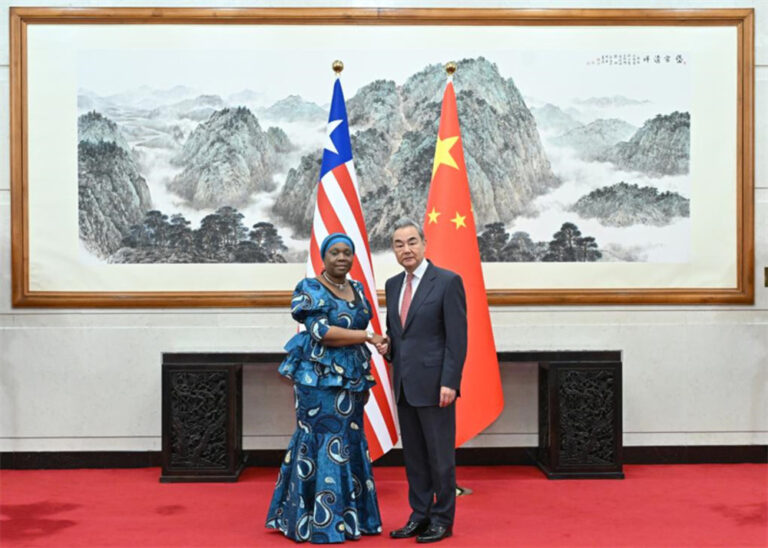
In a major push to deepen bilateral economic ties and accelerate local market development, the Chinese Embassy in Liberia successfully concluded a specialized, high-level conference in Monrovia aimed at the strategic implementation of China’s expanded zero-tariff trade measures.
Held from July 15 to 16, 2026, the event brought together nearly 20 key stakeholders and decision-makers, including high-ranking representatives from the Liberian Ministry of Foreign Affairs, the Ministry of Commerce and Industry, the Ministry of Agriculture, and the Liberia Revenue Authority’s Customs department, alongside prominent local chambers of commerce and business organizations.
Delivering the opening remarks, Chinese Ambassador Yin Chengwu highlighted the progressive evolution of the trade policy, which initially benefited least developed countries like Liberia starting in December 2024, before being extended in May 2026 to encompass all African nations maintaining diplomatic relations with Beijing. Ambassador Yin framed this expansion as a monumental milestone in market accessibility under the Forum on China-Africa Cooperation (FOCAC) framework, signaling a new era of shared development. By effectively eliminating import duties, the zero-tariff policy drastically slashes export costs for Liberian enterprises, allowing the country’s competitive agricultural and raw products to enter the vast Chinese consumer market with unprecedented price advantages. Beyond immediate trade balances, the embassy emphasized that the long-term dividends of the policy will manifest as a powerful catalyst for boosting local employment, attracting fresh foreign direct investment, and fostering deeper regional industrial integration.
The intensive, one-and-a-half-day conference utilized targeted video presentations from specialized Chinese trade experts who provided technical breakdowns of the customs, regulatory, and logistical frameworks required to maximize the policy’s benefits. The session concluded with a highly interactive question-and-answer forum, where Liberian trade officials and commerce representatives engaged enthusiastically with the material, mapping out practical steps to translate these regulatory advantages into tangible economic growth for Liberia’s private sector.
ABJ/APA