



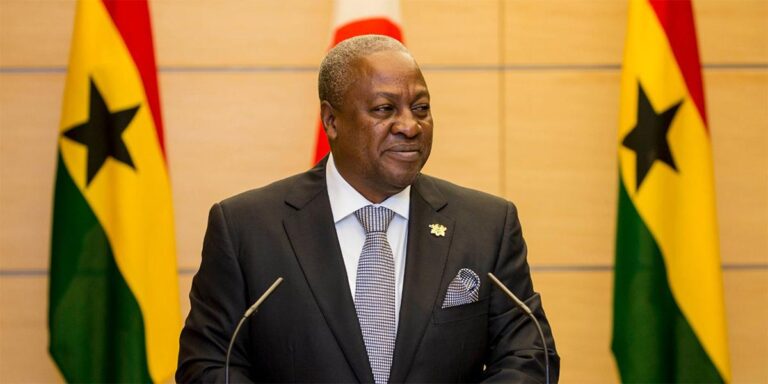
The Ghanaian government has on Friday announced the conclusion of the Extended Credit Facility programme with the International Monetary Fund (IMF) confirming the country’s exit from emergency financial support.
This announcement follows on from the transition process initiated in December 2025 by President John Dramani Mahama, following an improvement in key economic indicators.
The Government of Ghana announced on Friday the successful conclusion of its Extended Credit Facility (ECF) programme with the IMF, marking a decisive step in the country’s economic stabilisation and recovery process.
This official announcement follows on from the message addressed to the nation by President John Dramani Mahama on December 31, 2025, in which he stated that Ghana was embarking on a gradual exit from the IMF programme, in a spirit of partnership and “with dignity”.
The Ghanaian Head of State had described an economy that was in a fragile state upon his arrival, characterised by high inflation, significant youth unemployment and a loss of investor confidence.
He had, however, emphasised that the reforms undertaken since 2024 had enabled a gradual recovery of the macroeconomic situation.
According to the authorities, these adjustments have contributed to a significant decline in inflation, a strengthening of the cedi, a return to growth and an improvement in the business climate.
The renegotiation of public debt and the return of investor confidence have also been highlighted as key factors in the recovery.
Against this backdrop, the authorities have now confirmed the end of the Extended Credit Facility programme and the transition to the Policy Coordination Instrument (PCI), a non-financial IMF framework designed to support reforms and bolster the country’s economic credibility.
Ghana’s international reserves are also estimated at around $14.5 billion in February 2026, covering nearly six months of imports and strengthening the country’s external resilience.
President John Dramani Mahama reaffirmed his government’s commitment to prudent public finance management, fiscal discipline and the pursuit of structural reforms, in a new phase now focused on investment and job creation.
AC/fss/gik/APA