





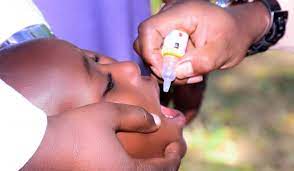
One year after successfully halting transmission of reimported wild poliovirus (WPV1), Malawi is shifting focus from emergency response to long-term health system resilience through a newly launched National Polio Transition Plan.
The plan aims to preserve and repurpose the infrastructure built during the country’s polio eradication efforts – including trained personnel, surveillance systems and emergency response mechanisms – by integrating them into Malawi’s broader public health framework.
“This is vital to keep Malawi polio-free and improve our capacity to detect and respond to other vaccine-preventable diseases,” said Patrick Chirwa, chairperson of the National Certification Committee.
Malawi was certified free of indigenous wild poliovirus in 2020 but a reimported case from southern Asia in 2022 prompted a swift national response.
By May 2024, transmission had been interrupted and in January 2025 the Global Polio Eradication Initiative reclassified Malawi as low risk on its global watchlist.
With external polio funding declining, the transition plan seeks to close gaps in workforce and financing while aligning polio-related functions with the Ministry of Health’s Expanded Programme on Immunisation.
It also promotes multisectoral collaboration across government agencies, civil society and development partners.
WHO Representative to Malawi, Neema Kimambo noted that the transition requires coordinated efforts from national and local institutions.
“Malawi’s success will depend on strong coordination between the Ministry of Health, EPI, the Public Health Institute of Malawi, district councils, health partners, NGOs and communities themselves,” she said.
The National Polio Transition Plan is being hailed as a model for other countries navigating the post-eradication phase.
It is expected to reinforce Malawi’s capacity for outbreak preparedness, routine immunisation and universal health coverage.
JN/APA