





Mali has taken a significant step toward modernizing its financial governance with the adoption of the final 2024 budget settlement.
This move is part of a wider reform effort aimed at boosting the transparency, efficiency, and credibility of public finances in a challenging economic context.
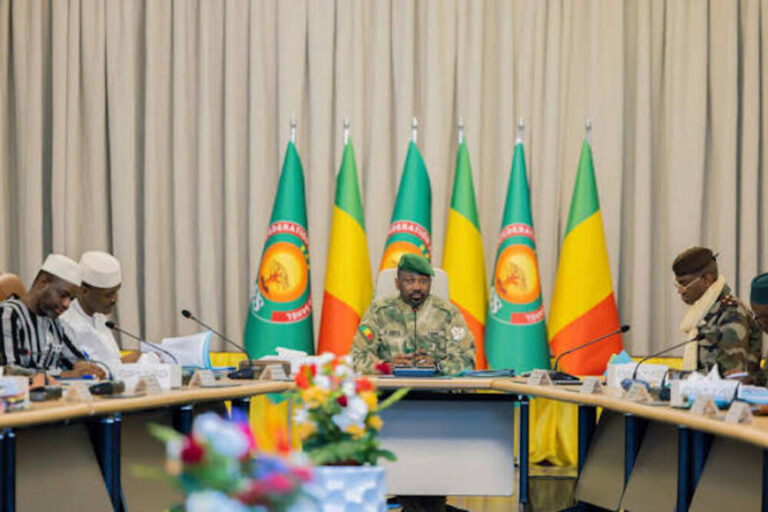
The draft law establishing the final settlement of the State budget for the 2024 fiscal year was adopted during the Council of Ministers meeting, chaired by the President of the Transition, General Assimi Goita.
The final budget settlement provides a true accounting of the state’s revenues and expenditures, allows for the adjustment of budget overruns, and ratifies additional appropriations previously authorized by decree.
The figures presented demonstrate generally sound budget management despite economic and social pressures: Revenue Collection: Projected revenues of 2,387.871 billion CFA francs ultimately reached 2,642.542 billion CFA francs, a collection rate of 110.67%. Expenditure Execution: Initial expenditure was set at 3,138.642 billion CFA francs, but execution was held to 2,844.422 billion CFA francs, representing a rate of 90.63%.
In parallel with the budget review, the Malian government is pressing ahead with institutional reforms to strengthen control and transparency mechanisms. A key component of this effort is the creation of the Court of Auditors, a move mandated by the directives of the West African Economic and Monetary Union (UEMOA).
This independent institution will be responsible for: Ensuring rigorous oversight of public finance management. Auditing the accounts of public accountants. Supporting the government and Parliament in monitoring finance laws and evaluating public programs.
The political will to establish this robust institution, which is intended to guarantee transparency and good governance, was symbolized by the laying of the foundation stone for the Court of Auditors’ headquarters in December 2024.
While challenges remain, particularly in the effective and full operationalization of the Court, the Malian government’s commitment marks a significant step toward more responsible management of public resources. Once fully operational, the Court of Auditors is expected to be a crucial lever for improving financial governance and boosting confidence among both international donors and foreign investors.
MD/te/Sf/fss/abj/APA